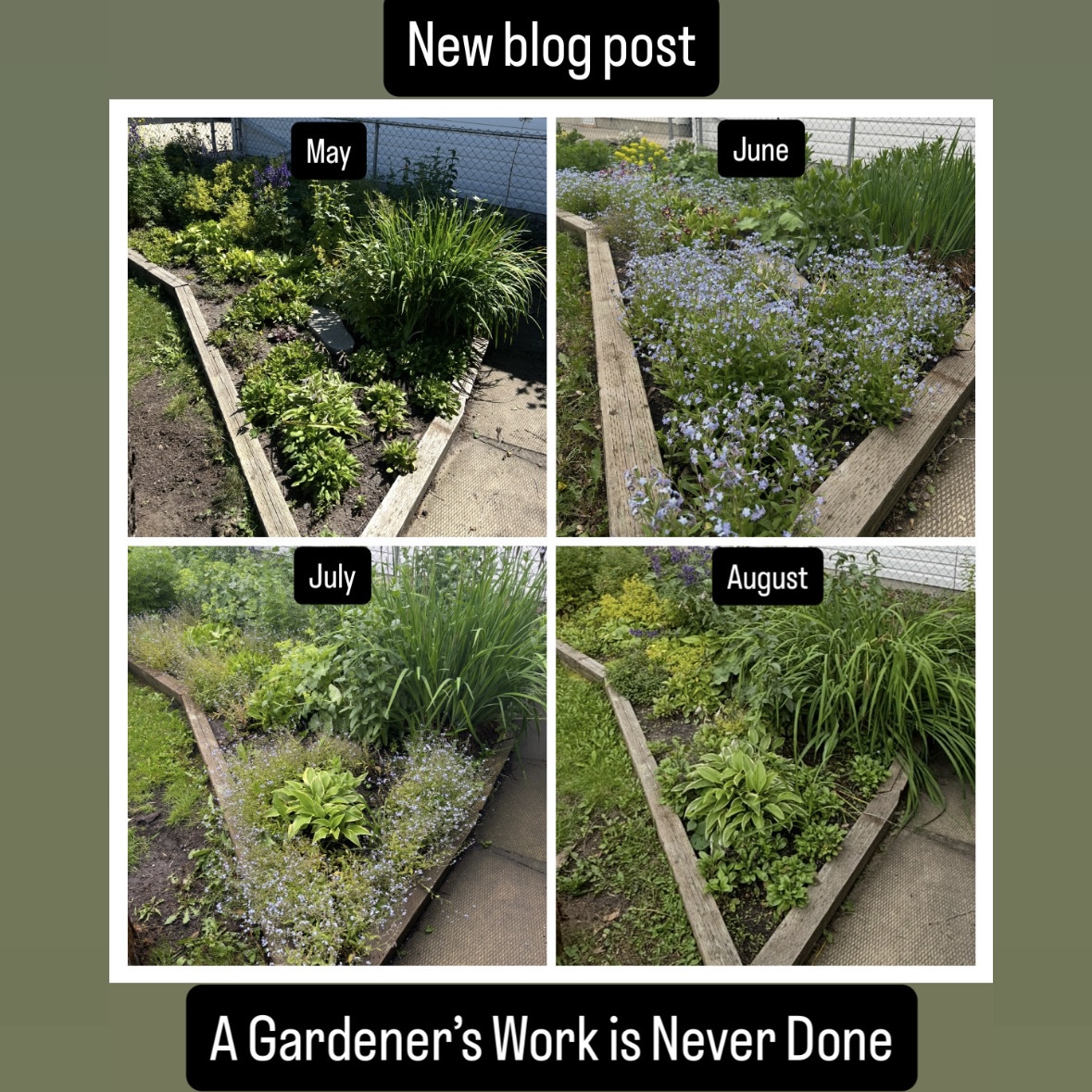
A Gardener’s Work (and their garden) is Never Done
Written by Heather Morren
Some days, as I head out to the garden with weeding tool in hand, I lament that the work never seems to be done. Didn’t I deadhead these lupines last week? I swear I picked a dandelion in this exact spot the other day. Wasn’t I just applying bugspray and swatting mosquitos yesterday? Why is the sun so bloody hot and the smoke so oppressive?
On days like that, sunbaked and mosquito bitten, it can take real effort to find something positive about my garden. When I find myself in a negative feedback loop like that, I like to stop, take a deep breath, and take a long, discerning look around my garden.
Only then do I notice:
What is in bloom?
What needs a little love?
What has spread to a new spot to fill in a gap?
What needs to be reigned in?
And only then can I truly appreciate all the changes that my garden goes through in a season.
May & Early June: The Awakening
I would argue that work in my garden begins long before planting, even before spring clean up. Spring, for me, starts with planning.
As early as March, I begin pulling out my seed book to see what I still have left from last season. Then out comes the pencil and paper as I make a draft of what I am going to plant where to optimize my garden space. By April, I have seedlings started on my credenza, grow light shining blue and red down upon their delicate heads.
Once the weather warms a little, I make my way out into the yard. The grass needs raking. Last year’s perennials get cut back. Early bloomers like crocus, daffodils, and tulips need careful tending. And, yes, even weeding starts this early. By late May, I’ve brought some of my seedlings outside for hardening off and eventual planting.
This is a magical period where tiny specks of greenery bring great joy to the observant and hopeful gardener. The garden is waking up from its long wintery slumber.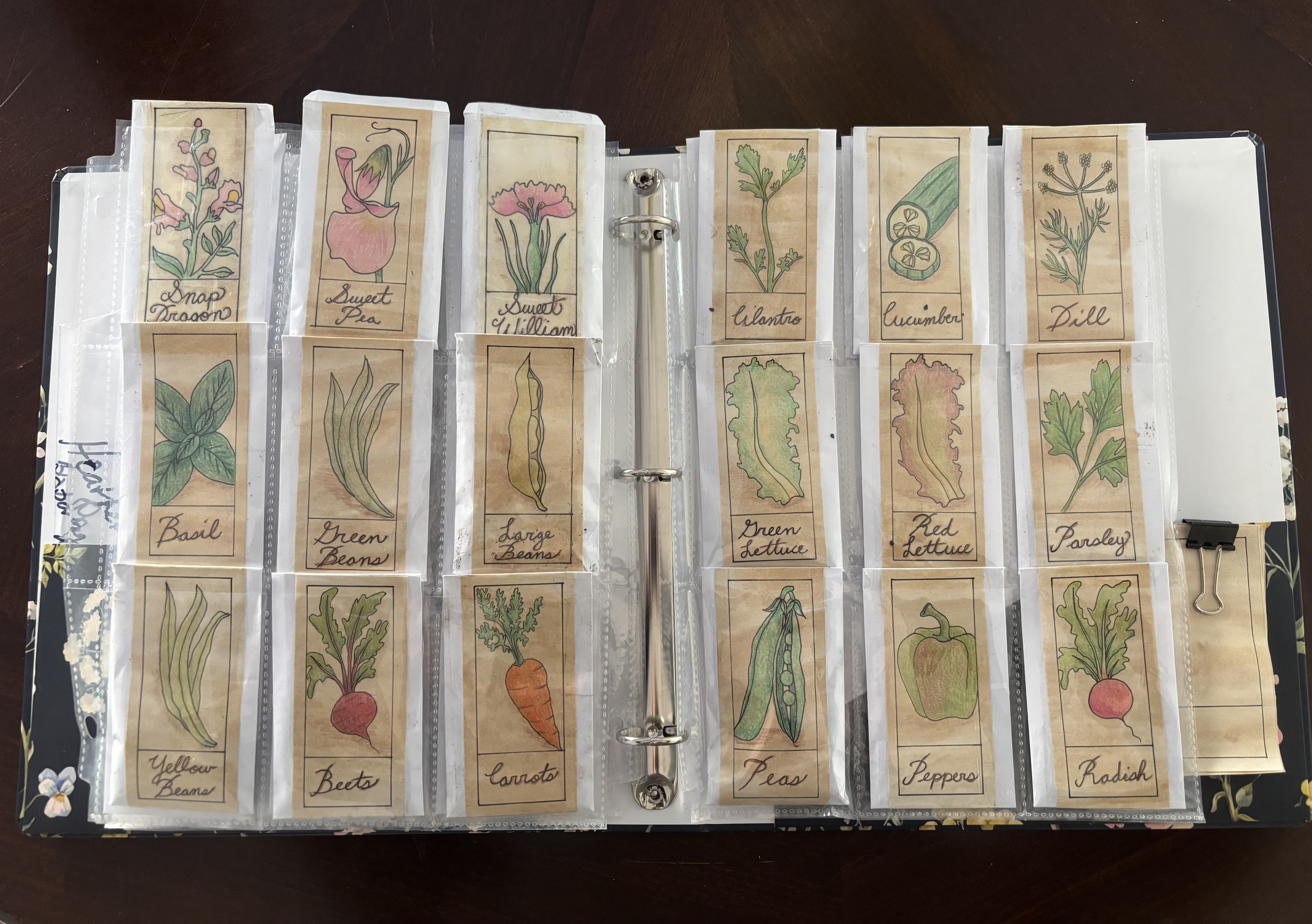
My seed book
Late June & July: Fever Pitch
If I could only use two words to describe this part of the season, I would use the phrase “fever pitch”.
This is the busiest time for both gardener and garden alike. Flowering plants go through wave after wave of blooming. Spent flowers must be deadheaded to keep plants looking their best. Prolific perennials like forget-me-nots, lady’s maiden and hollyhocks must be thinned and kept in their lane, lest they take over every available space. Shrubs and hedges are starting to look shaggy and unkempt. And, of course, weeds pop up anywhere and everywhere.
Although we had quite a wet spring and early summer, one must keep on top of watering too. The days are staying hotter and, though rain often threatens to fall, it actually happens less frequently than predicted (are the weather folks ever right anymore?).
And business is booming, especially this year, after all the rain. Inquiries come in by phone, email, text and website inquiries. Schedules are filled quickly and continually being adjusted to accommodate everyone.
July is the time that everything is building towards its zenith, exploding with foliage and color.
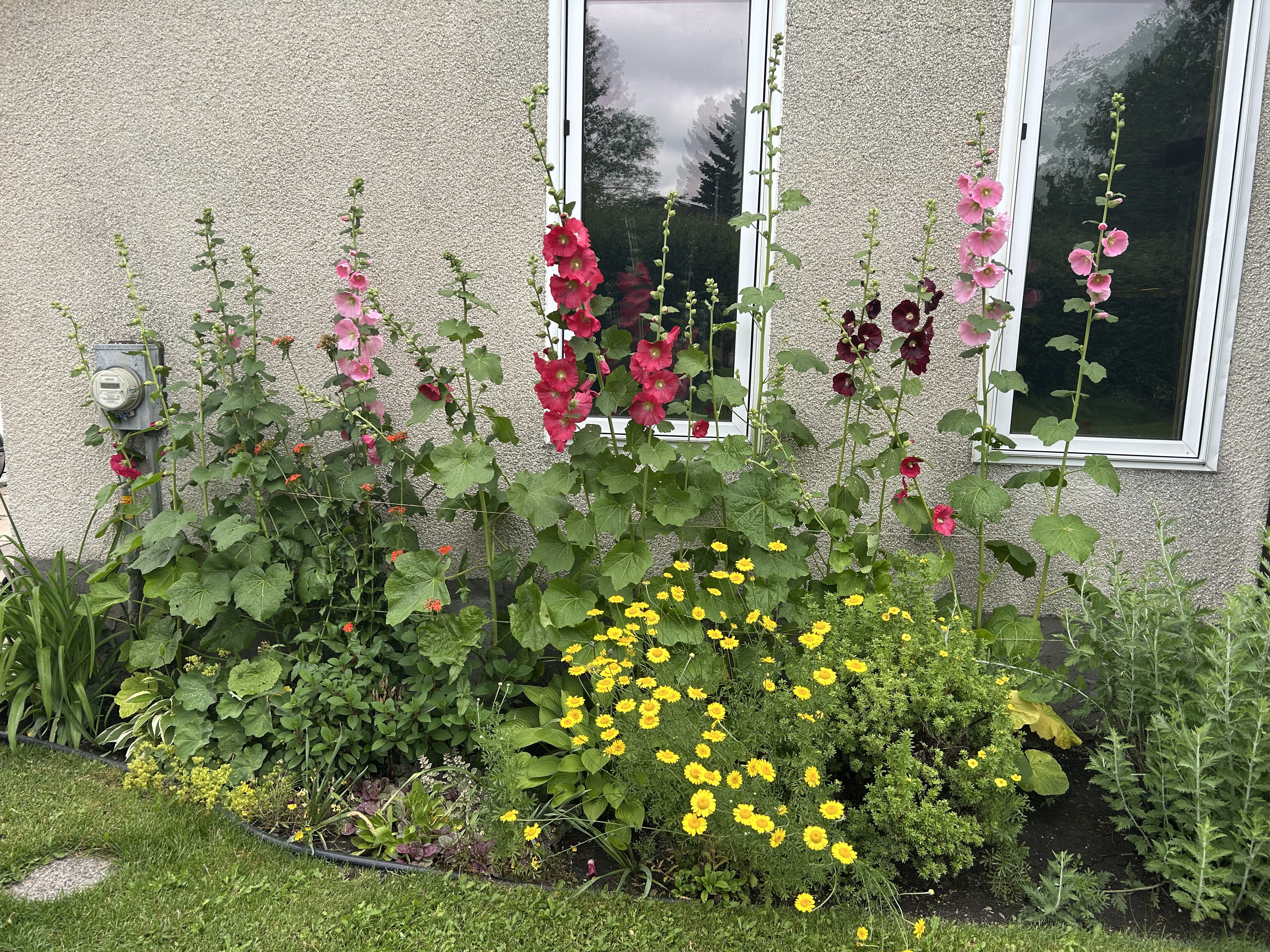
Hollyhocks and golden marguerite in full bloom
August: Exhale
August is my favorite month of the entire gardening season. Right around now my garden starts to rest. Most flowers have already bloomed and been cut back (if I’m on top of things). Late bloomers, like coral bells, black eyed susans and chrysanthemums are just getting started, ready for their final show in September. Sure, the weeds still grow, but with the heat of the season, even those slow down a little bit. And produce, like apples and cherries, is usually harvested in late August and turned into delicious pies, jams and jellies, or dried for snacking during the colder months.
Although business stays steady throughout the entire season, we are usually in pretty consistent routines with our clients by this point. Gardeners know where they are going and what needs to be done. Maintenance is the name of the game.
But summer is not over yet. Everything is in a state of quiet rest, awaiting the next transition.
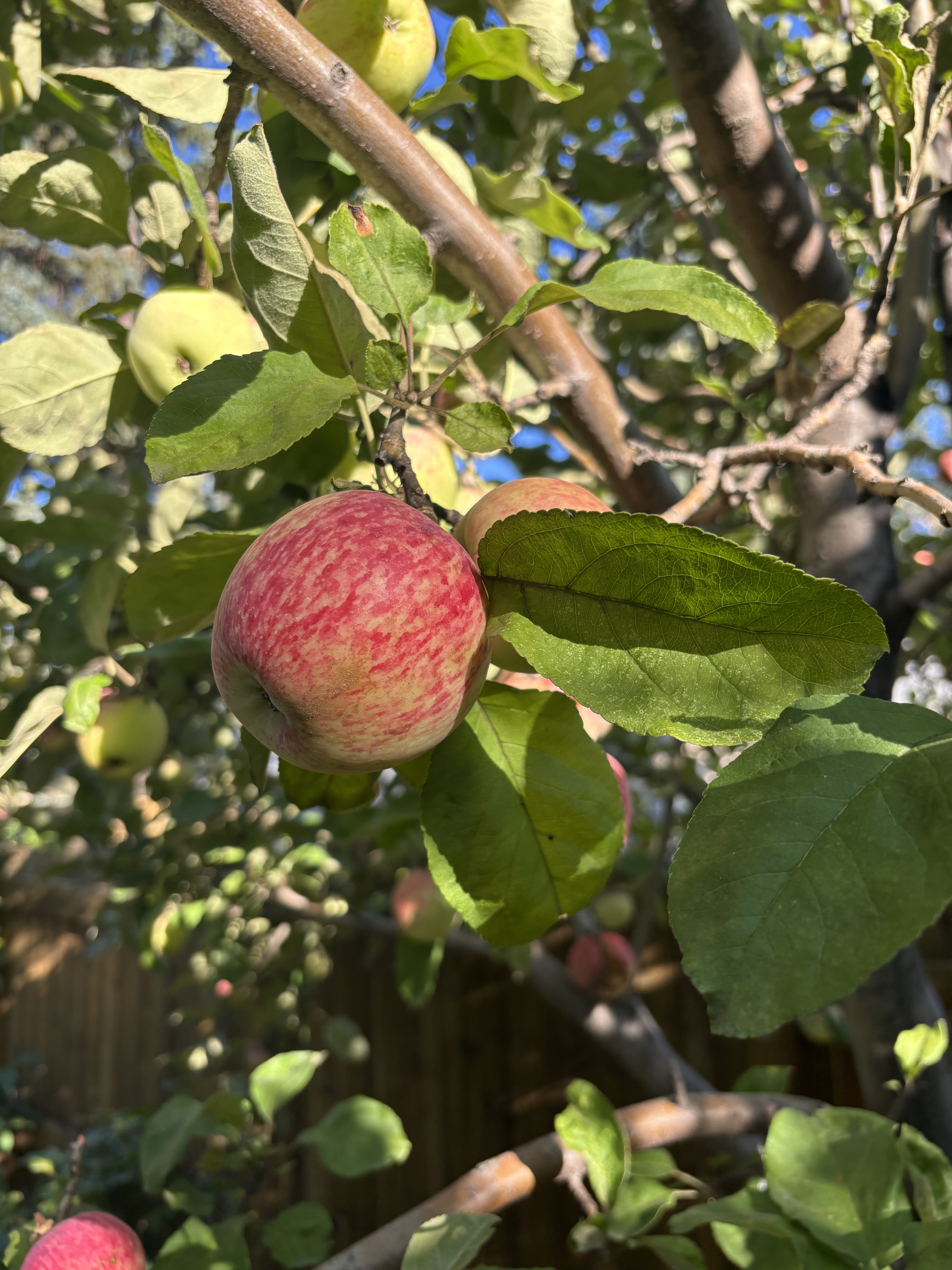
Apples, ready for picking
September & October: The Final Push
Autumn is a confusing time for Edmonton gardens. Hot summery days mix with the threat of cool nights. It’s hard to know what to do: start fall clean up or wait just a liiiiiittle bit longer?
Fall is the time for planning for the future. Bulbs like tulips, daffodils, garlic and onions can be sown to await spring. Perennials can be divided and moved to new homes for the next season.
But sometimes we get so hung up on cleaning up their “messy” yard that we sometimes forget how important our plants can be over the winter. Dried seed heads can be a welcome snack for birds during the colder months. Hollow stems and low lying leaves can be homes for insects so they can start their work in the early spring. And some plants just look visually interesting against the blanket of white snow. So when the urge to cut everything down and tidy everything up hits, take a moment to look at your garden a little differently. Not everything that looks finished needs to be removed. Sometimes leaving a little behind is exactly what the garden needs.
Fall gardening isn’t just about cleaning up what’s left of this season. It’s about making thoughtful choices that help your garden, and everything that lives in it, prepare for the next one.
A healthy garden, or gardener, isn’t one that looks exactly the same all season. It’s one that changes beautifully as each month brings something new.
Photos in this article were taken by Heather Morren. Information was sourced from a wide variety of online resources. Please ask, should you wish to see a full list.