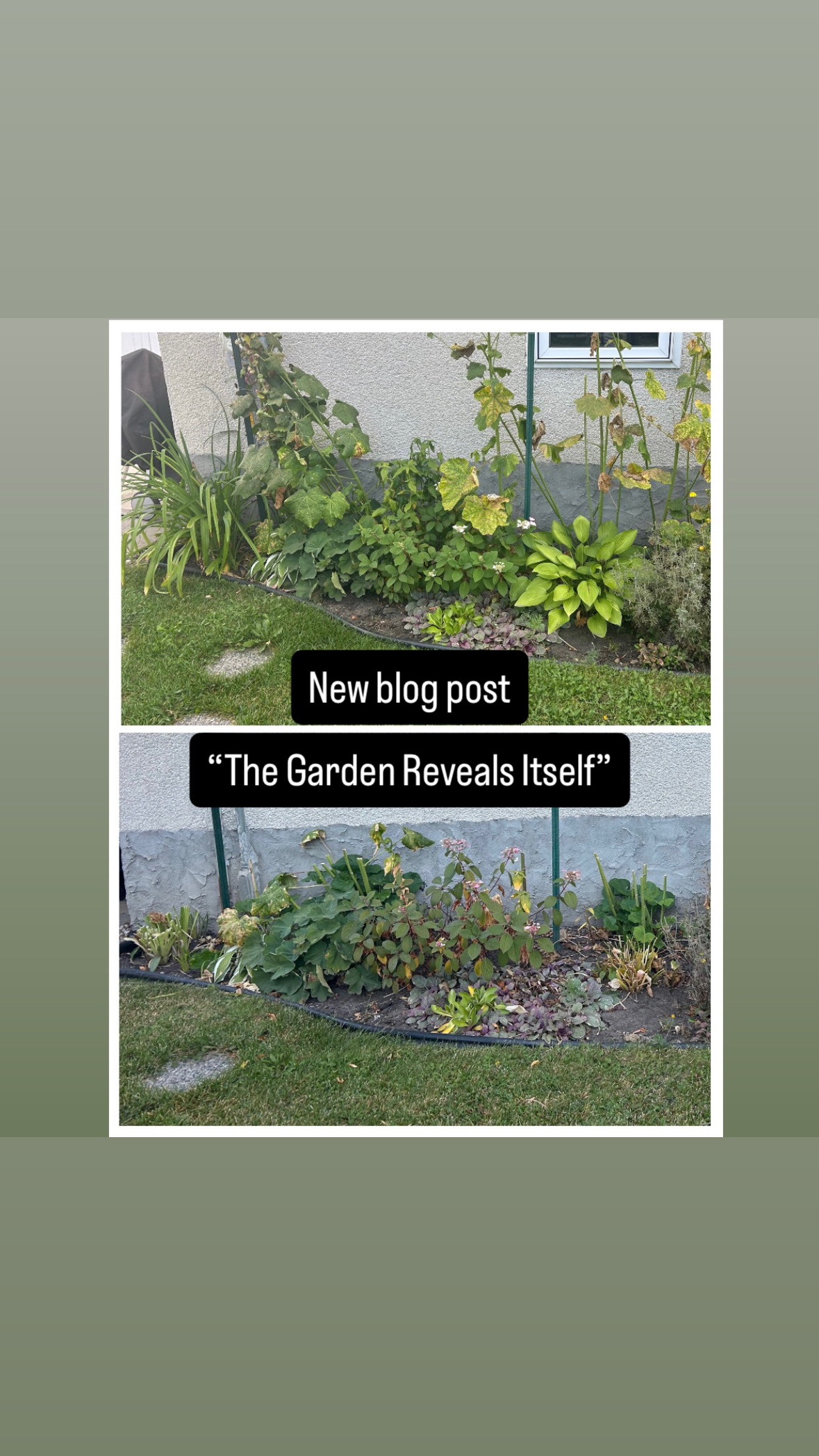
The Garden Reveals Itself
Written by Heather Morren
As I sit here writing the final blog article of the 2026 gardening season, my eyes wander to the world outside my window. The clouds are grey, hiding the sun from view. Rain occasionally patters on my window, not quite sure if it really wants to come down or stay amongst the clouds. The wind comes in blustery gusts, making the cedars dance. It is clear that autumn has finally come.
By October, every garden tells a slightly different story. Some gardens are still full of colourful late-blooming flowers and healthy green foliage. Others are beginning to grow dormant, with leaves yellowing or stalks reaching towards the ground instead of the sky. And some look almost like they did in the spring, just dead stalks and leaf litter.
Surprisingly, this time of the year, when you can see the bones of your garden, is actually very useful because it gives you an opportunity to step back, look at your garden, and reevaluate.
Grass
Grass is always slowly spreading into your garden beds, growing within perennials, taking over the edges and, most unfortunately, spreading its roots underneath the soil. It is certainly one of the plants that most gardeners cite as their least favourite to remove.
A few blades of grass here and there is one thing, but when it starts to be noticeable, that can be a much bigger problem. Many common lawn grasses spread through underground stems and roots, which means that they extend under the surface of the soil in all directions, and removal can be very time-consuming. This can be the distinction between some basic garden maintenance and starting to move into restoration territory. Don’t let that grass take over!
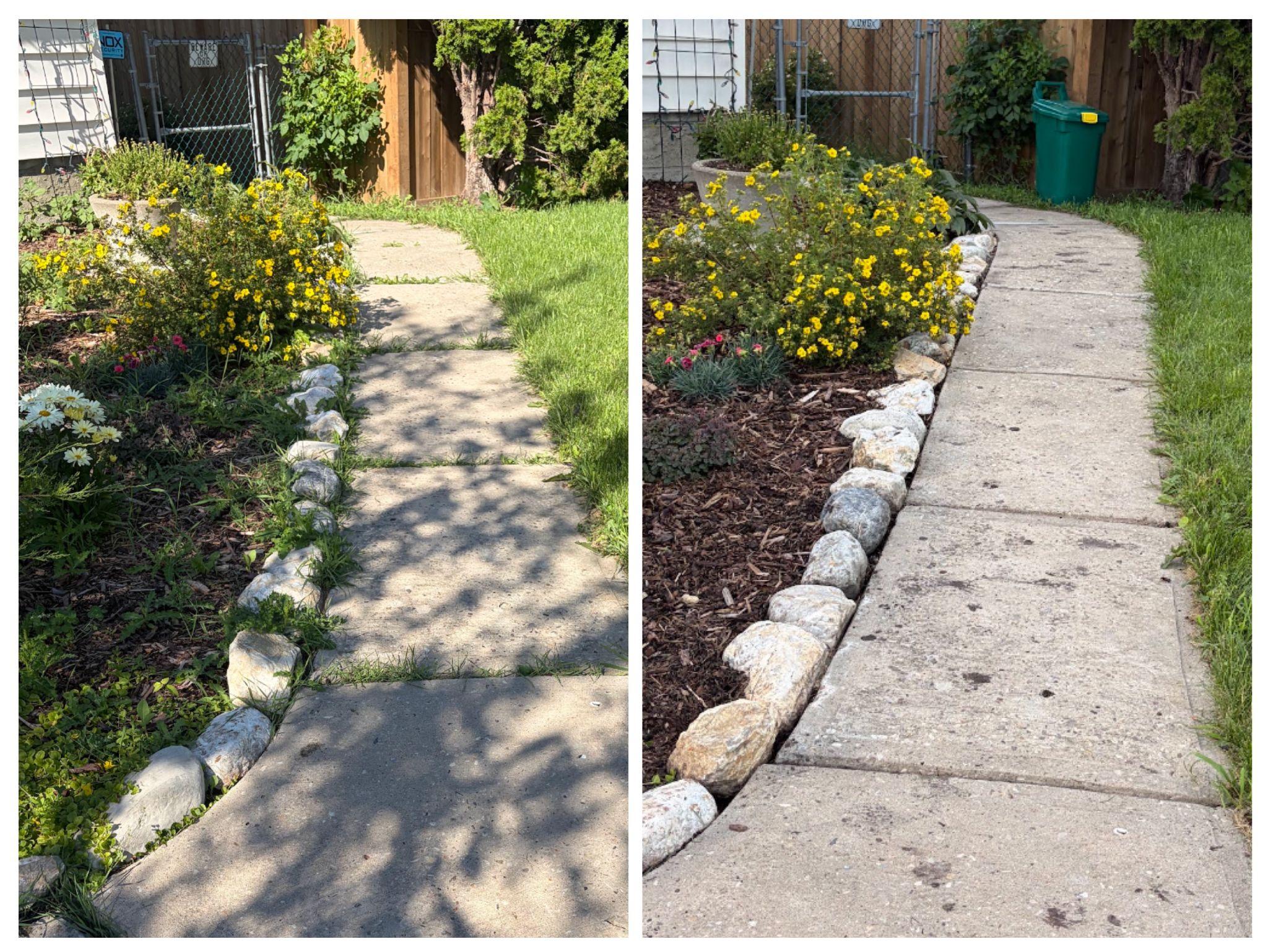 Grass removal from along the edge of a garden bed
Perennials
Every year your perennials grow bigger and bigger, which can be very exciting…and deceptive. At the height of the season, it can be hard to notice how much they’ve expanded, but when you spend 10 minutes cutting back one daylily, it can start to be pretty obvious.
Things that looked appropriately sized when planted can eventually become so big that they are smothering neighbouring plants, blocking pathways or flat out taking over an entire section of a bed (I’m looking at you, ladies’ mantle).
The bare-bones aesthetic of fall makes the structure much easier to see. But the solution isn’t always to cut them back and hope for the best. Sometimes the plant needs dividing, transplanting, pruning or full-on removal.
Garden Beds
Like the perennials, when you look at your garden beds day to day, you likely don’t notice them changing, but they do! Grass, as previously mentioned, moves in and plants spread. Edges become indistinct. Mulch and soil settles and decomposes. Eventually, the beds start looking like a completely different beast than you started with.
A defined edge can completely change the appearance of a garden, even without adding a single new plant. Whether you just remove the plants along the edge, dig a trench, put down rocks, or add some of that black plastic edging, it can really change the entire feeling of your garden space.
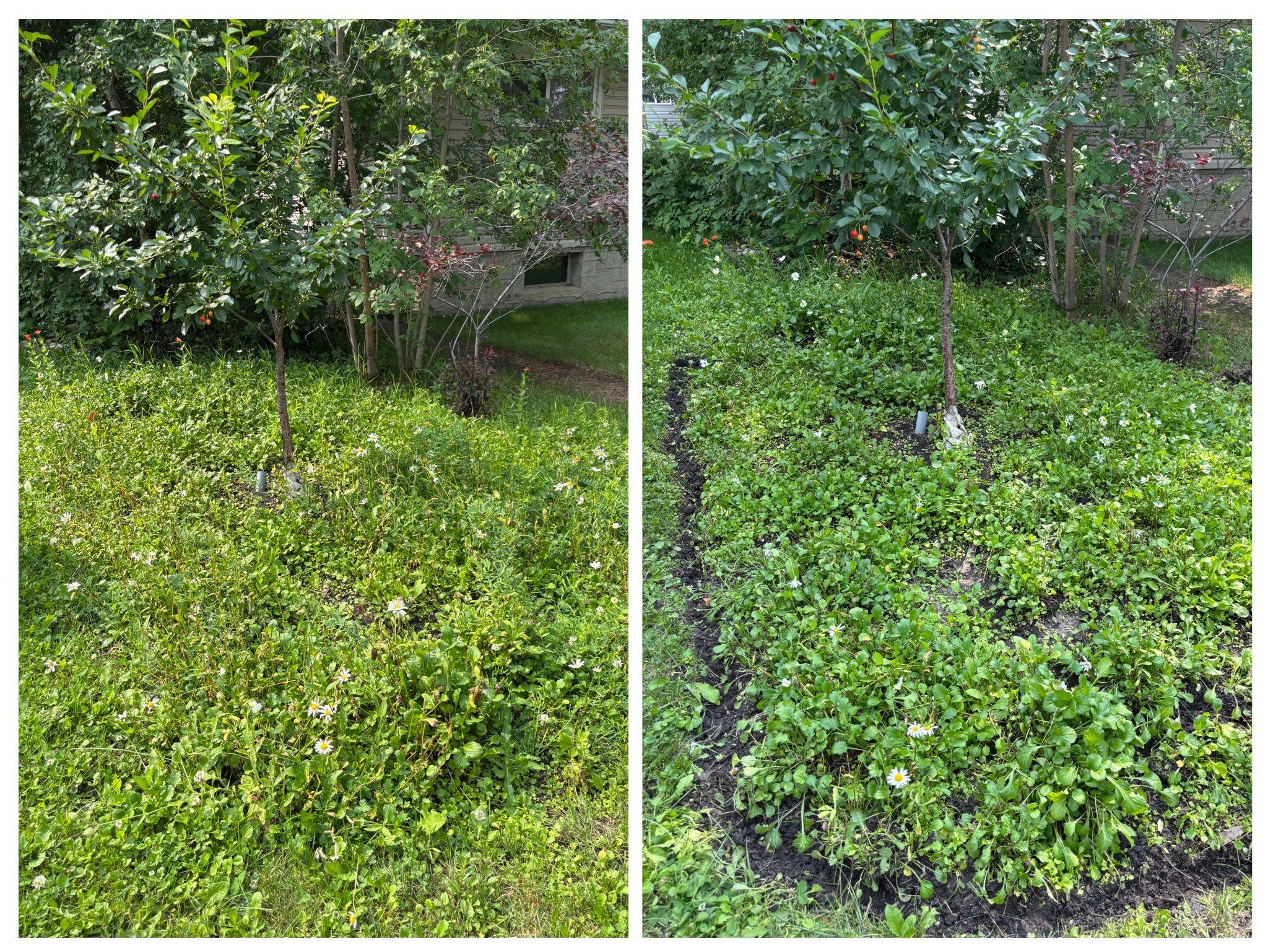
Adding a trench around a garden bed to make it more defined
Weeds
Some weeds are obvious in summer. Thistle stands tall, poking above the canopy. Dandelions put on a colourful show, saying, “here I am.” Some weeds are right there, in your face, just begging to be yanked from their dirt home.
But others are much easier to identify in fall because the desirable plants are dying back. During the season, tiny saplings and grass may hide below the canopy. Creeping bellflower invades quietly in shaded spots until it takes over entire beds without you even realizing.
A garden can look reasonably tidy from the street while still having a significant weed problem underneath the canopy. Fall is a great time to notice what has been hiding all summer and make a plan for dealing with it.
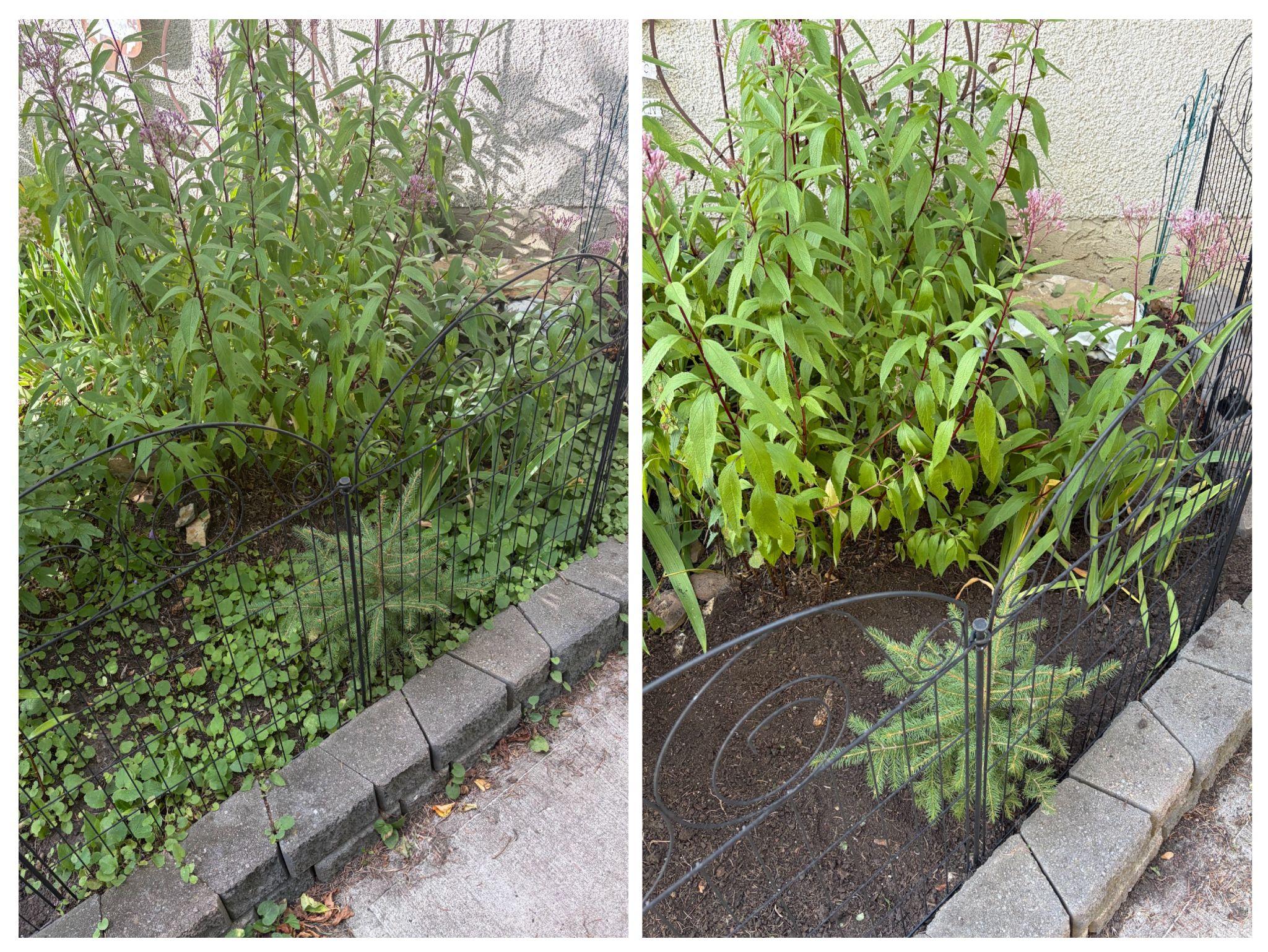
Removal of creeping bellflower from below other perennials
Replacing Plants
While fall isn’t necessarily the best time to purchase and install most plants, it is a good time to notice what isn’t doing as well as it once was.
Maybe one section is unusually sparse or overcrowded. Perhaps plants repeatedly die in the same spot. One area may be constantly wet while another dries out quickly. Maybe a plant that was previously thriving is suddenly taking a turn for the worse.
Don't automatically replace a struggling plant. Take this time to figure out why it struggled in the first place. Did you choose the wrong plant for the sun exposure it gets? Did you plant something directly under your downspout and not account for an entire month of rain? Did you plant it too close to an AC unit? Is it being crowded out by plants that are more established?
Once everything starts dying back, you can see where the garden isn't thriving. Make notes (because you know full well you will forget) and plan for the future.
Restoration
Sometimes you start a fall cleanup and realize very quickly, “This isn't just a cleanup anymore. This is a whole other monstrosity.”
I am not innocent in this. By mid to late August, I often lose interest in keeping my garden in ship shape. But restoration is more than just getting a bit lazy in the later part of the season.
This realization that your garden may need a little, or a whole lot, more can feel sudden, but often it’s the result of several seasons of neglect or difficulty staying on top of your yard work. Maybe you’ve let grass and weeds slide more than you used to and, before you know it, the boundaries of your garden beds become lost in your lawn. You may have waited too long to prune your shrubs and now they look like shaggy dogs on the outside and bare on the inside.
It can be hard to admit when you have reached the limits of your ability (or financial ability) to manage your garden, but believe me, it's a lot easier (and cheaper) to maintain a garden than it is to restore it to its former glory. Recognizing the scale of the problem is part of good garden care.
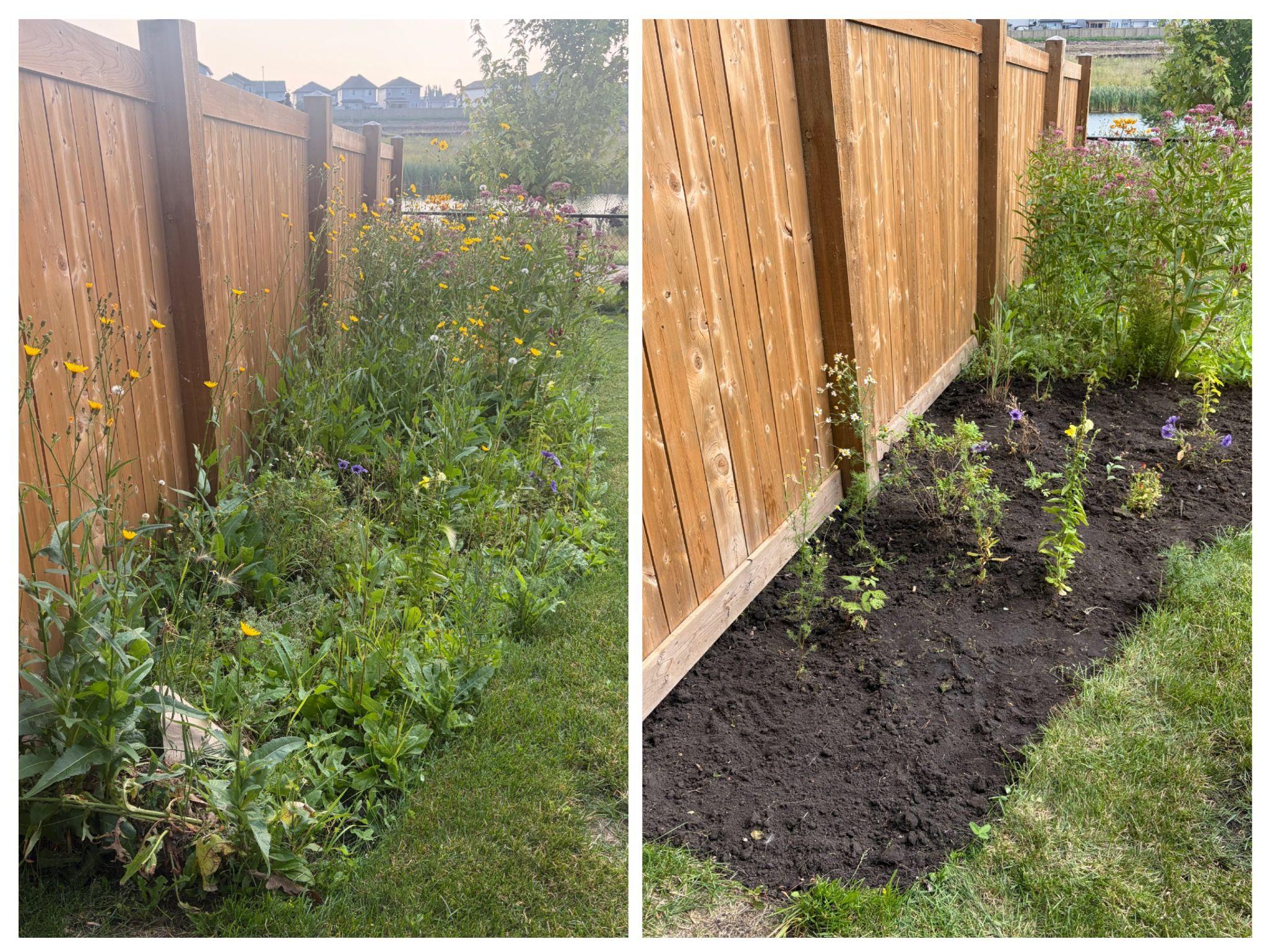
Full restoration of an overgrown garden bed
You don't have to fix every problem you find in October. In fact, some problems are better addressed in spring. But knowing what's happening in your garden before winter gives you a much better starting point when the growing season returns.
So while you're cleaning up your garden this fall, take a few minutes to look beyond the leaves and dead foliage. Once the garden starts to quiet down, it has a lot to show you.
Photos in this article were taken by gardeners at Heather’s Gardening Service. Information was sourced from a wide variety of online resources. Please ask, should you wish to see a full list.