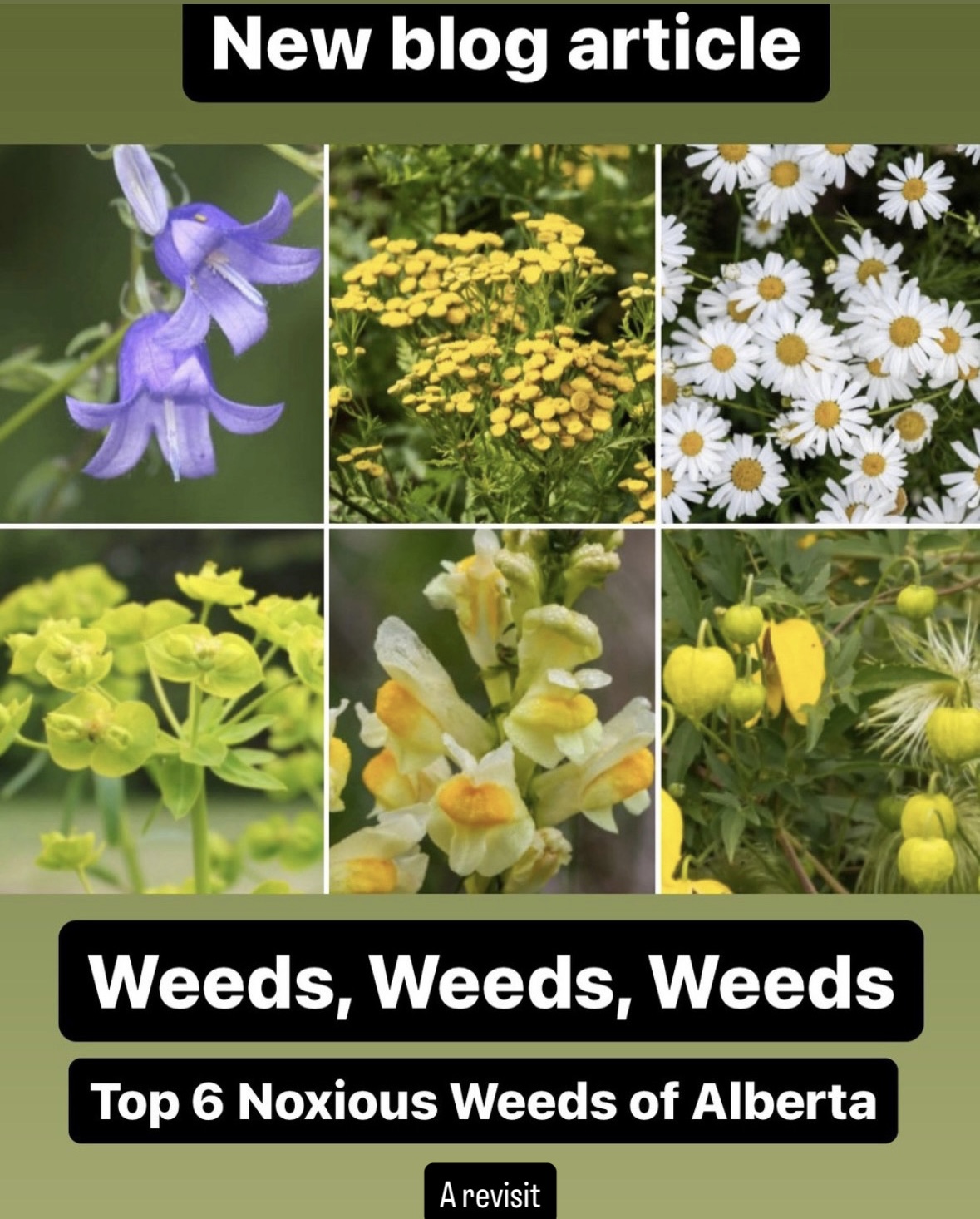
Weeds, Weeds, Weeds
Top 6 Noxious Weeds of Alberta
A revisit
Written by Heather Morren
When you hear the word "weed" most people think of the bright yellow dandelions overtaking their lawn. A weed is simply any plant growing where it isn't wanted. A dandelion in your flower bed is a weed, just the same as forget-me-nots growing in your lawn are. But being a weed doesn't necessarily make it invasive.
While dandelions can certainly be frustrating, there are many other plants, ones that are considered invasive, that can cause much bigger problems in our gardens and natural areas. An invasive plant is one that spreads aggressively, outcompetes other plants, and can damage gardens, natural ecosystems, and wildlife habitat. Some invasive plants are also regulated under Alberta's Weed Control Act, where they may be classified as noxious or prohibited noxious. These are plants that landowners are required to control or eradicate to help prevent further spread.
While the legal classifications may change over time, invasive plants remain an important issue for Alberta gardeners. By recognizing them early and managing them responsibly, we can help protect our own gardens as well as nearby natural areas.
As a gardener, I believe it is our responsibility to help ensure that native plants and wildlife are not displaced by invasive and noxious species spreading through our landscapes. To help you identify some of the most common offenders, here are six invasive, noxious or regulated plants every Alberta gardener should know.
Creeping Bellflower
Creeping Bellflower is very common in Edmonton-area gardens. It grows happily in flower beds, along sidewalks, and near ponds and river valleys. In its early stages, the plant produces heart-shaped leaves, while mature plants grow to about two feet tall with beautiful purple bell-shaped flowers.
Although its flowers are attractive, the real problem lies underground. Creeping bellflower spreads through an extensive system of thick, white roots (rhizomes). Even tiny pieces of root left behind can produce entirely new plants. Simply pulling the stem rarely removes the plant.
In recent years, creeping bellflower was removed from Alberta's list of regulated invasive plants because it had become so widespread that provincial regulation was no longer considered an effective management tool. However, it remains one of the most persistent invasive plants found in residential gardens.
To control creeping bellflower, dig deeply and remove as much of the root system as possible. Expect to repeat this process over multiple seasons.
❌ Don't rototill the area, as this breaks the roots into many smaller pieces that can each regrow.
❌ Don't compost the roots. Dispose of them according to your municipality's recommendations.
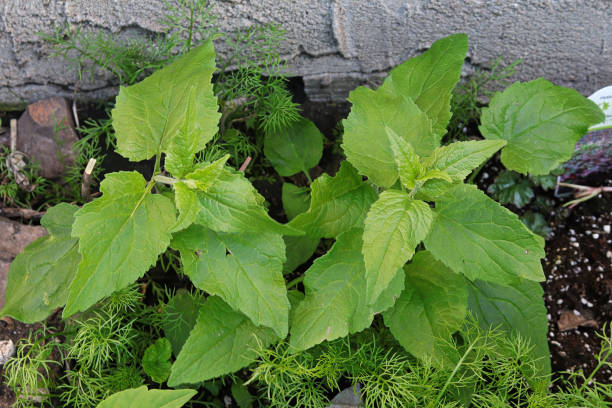
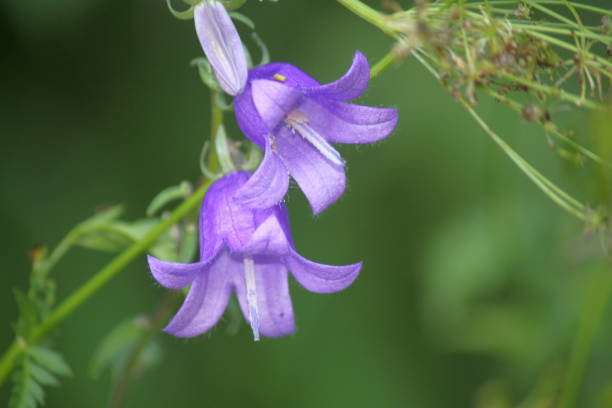
Creeping Bellflower
Common Tansy
Common Tansy was introduced to North America from Europe and was once commonly grown as an ornamental and insect-repelling plant. Today, it has become an invasive species in many parts of Alberta.
Its bright yellow, button-shaped flowers make it fairly easy to identify.
Manual removal is often the most effective control method, especially before the plant produces seed. Repeated removal and encouraging healthy competition from desirable plants can help reduce infestations over time. Common tansy contains compounds that are toxic if ingested and may cause skin irritation, so wearing gloves during removal is recommended.
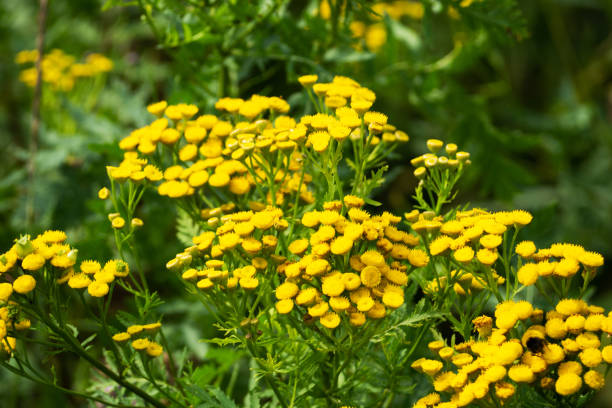
Common Tansy
Oxeye Daisy
At first glance, oxeye daisies look like cheerful wildflowers. Unfortunately, they spread aggressively into pastures, roadsides, and natural areas. Each mature plant can produce hundreds of seeds every year, allowing populations to expand quickly.
Unlike creeping bellflower, oxeye daisy spreads primarily by seed. Removing flowers before they mature can significantly reduce future infestations. Manual removal, including as much of the root as possible, remains one of the best methods of control.
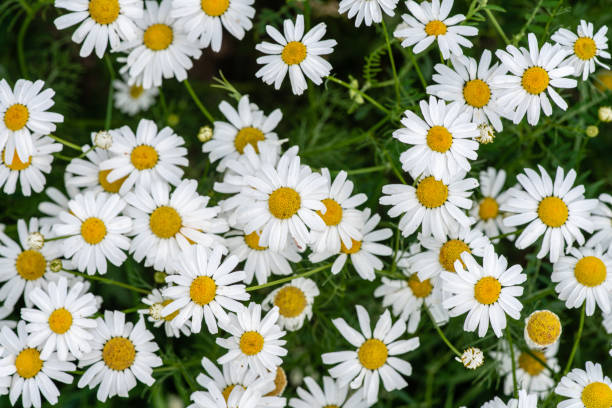
Oxeye Daisy
Leafy Spurge
Leafy spurge is a shrub-like perennial introduced to North America in the 1800s. Today it can be found across much of western Canada.
Growing up to one meter tall, it is recognizable by its yellowish-green flowers and the milky white sap released when stems are broken. The milky sap can irritate skin, so gloves are recommended during removal.
Leafy spurge spreads in two ways: through an extensive creeping root system and by seed.
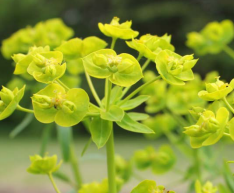
Leafy Spurge
Yellow Clematis
Yellow Clematis is an ornamental vine originally introduced from Asia. While many clematis varieties are well-behaved garden plants, the yellow variety spreads aggressively by seed.
In late summer and fall, its flowers develop into fluffy seed heads that are easily carried by the wind into neighbouring properties and natural areas.
Removing seed heads before they mature is one of the most effective ways to reduce its spread.
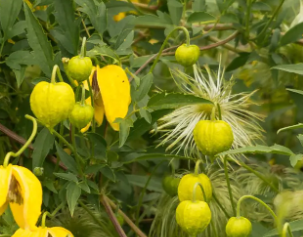
Yellow Clematis
Yellow Toadflax
Don't let the snapdragon-like flowers fool you.
Yellow toadflax can be distinguished from ornamental snapdragons by its taller growth habit, narrow leaves, and the orange patch inside each flower.
Like several other invasive plants, it spreads through creeping roots while also producing abundant seed. This combination makes it difficult to eradicate once established.
Digging out as much of the root system as possible is recommended, though repeated monitoring is often necessary.
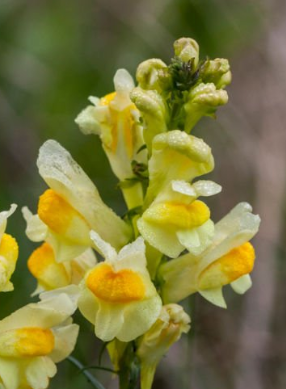
Yellow Toadflax
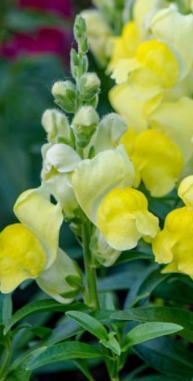
Yellow Snapdragons
Proper Disposal Matters
One of the biggest mistakes homeowners make is composting invasive plants.
Plants that spread through roots or rhizomes, such as creeping bellflower, should never be placed in backyard compost piles, as they can survive and continue growing. Likewise, plants that have already gone to seed should be bagged carefully to avoid spreading seeds throughout the yard during transport.
Edmonton recommends putting noxious weeds in a bag and then disposing of them in your black garbage cart. When in doubt, check your municipality's recommendations for disposing of invasive plants.
Finding an invasive plant in your garden isn't a reason to panic. Most infestations develop over many years, and early action is far more effective than waiting until a plant has taken over an entire bed.
The goal isn't to eliminate every weed from Albert. That simply isn't realistic. Instead, we can all do our part by learning to recognize invasive plants, preventing them from spreading, and making thoughtful choices about what we grow in our own gardens. Small actions in individual yards can make a big difference for our neighbourhoods and local ecosystems.
For an up-to-date list of provincially regulated weeds in Alberta, visit the Alberta government's website: