Written by Heather Morren
The commercialization of holidays is a common complaint nowadays. Stores use it as an excuse to sell, sell, sell! Well, as someone who agrees with that sentiment, I’m here to tell you that a little retail therapy once in a while isn’t a bad thing.
I’m not saying you should go out and buy a heart shaped pizza or take your partner to a $200 Valentines dinner. I’m not saying you should buy a giant package of Hershey’s kisses that should last you months but only last a week. I’m not saying you should buy a bouquet of roses that will be half the price the next day. This Valentine’s Day, treat yourself by upgrading your plant game!
Buy New Pots
There are a lot of really cute pots out there! If you’re looking to save a buck, most Dollar Stores sell pots year round and more are showing up now that spring is on its way. You can buy pots at Garden Centers, Greenhouses and even hardware stores.
My personal favourite place to go for pots is HomeSense. Great selection at surprisingly low prices! But don’t forget to invest in pots that aren’t just pretty but also offer good drainage.Drainage is so important for our indoor plants! Letting water stand at the bottom of your pots can lead to root rot, especially in the winter months when they don’t need to be watered as frequently because of the lack of sunlight.
Find a pot you love with no drainage? No problem! Skip the rocks. That’s an old wives tale. Instead:
- Add a drainage hole (and maybe a cute thrifted plate to catch the excess water).
- Adjust your soil to include perlite, pumice or orchid bark depending on the plant.
- Place your ugly nursery pot inside of a slightly larger decorative pot so excess moisture can collect at the bottom.
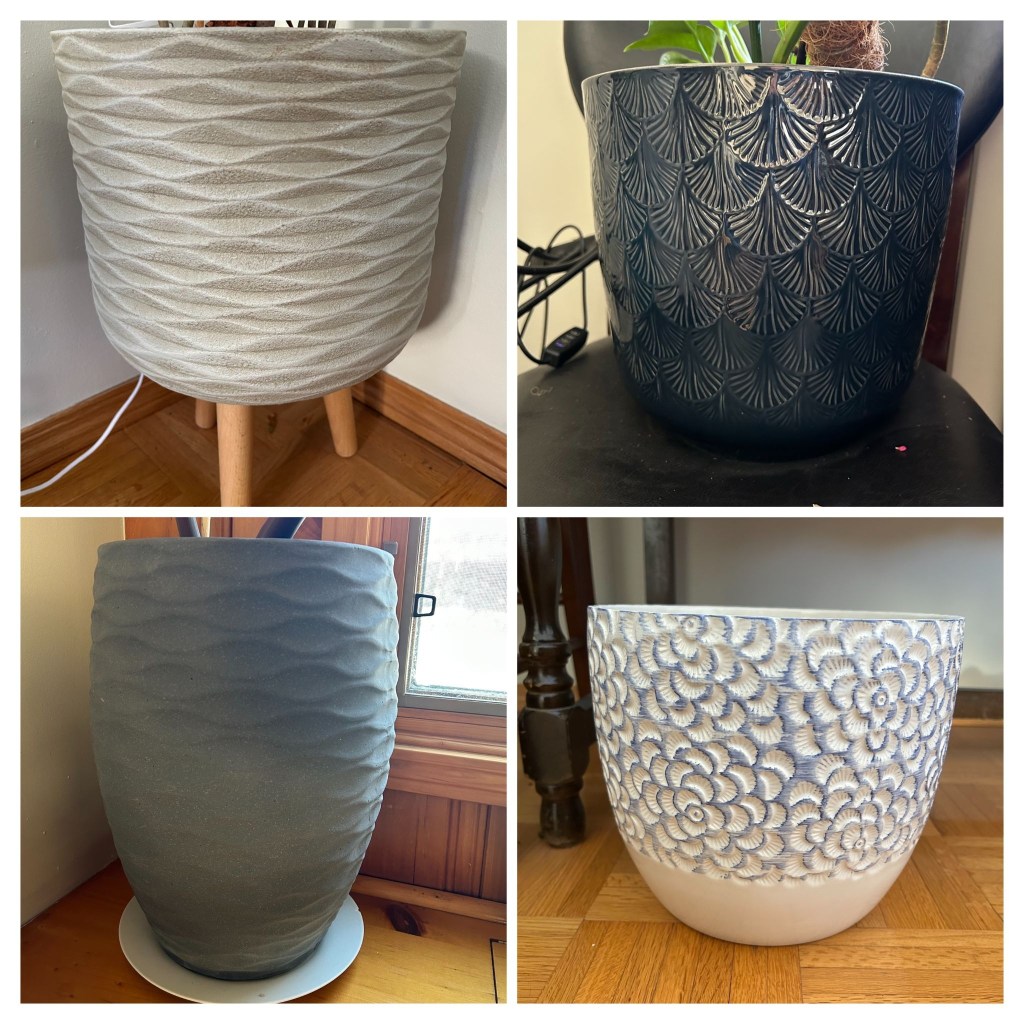
Some of my Home Sense pots.
Upgrade Your Soil
I am 100% guilty of buying the big bag of all purpose house plant soil and using it for everything. It often includes peat, perlite, and compost but also sometimes includes wetting agents and fertilizers.It’s a good starting place but the fact of the matter is that different plants have different nutrients and drainage needs.
Soil comes in many varieties, including:
- Cacti/Succulent Soil
- Usually includes pumice, sand, perlite or gravel for increased drainage.
- Great for cacti, aloe and jade.
- Tropical Soil
- Usually includes peat moss (for moisture retention), perlite (for drainage) and some kind of compost (for added nutrients).
- Great for monstera, pothos and philodendren
- Fern Soil
- Usually includes peat moss (for moisture retention), fine compost (for nutrients) and minimal perlite for a liiiiitttle drainage. These plants often have delicate roots that dry out quickly.
- Great for Boston Fern, Calathea, and Prayer Plants.
- Other common soil types include orchid mix, African Violet soil, Palm soil and Bonsai soil.
Invest in a Grow Light
This was very important for me and my plants this winter. My Golden Pothos had previously been wound around an outside window, and as the temperatures dropped, it started losing leaves due to the cold. I had to move it, but knew there would be a significant risk due to shock and a change in light.
A simple grow light turned on for 8 hours a day gave my plant enough “sunlight” to help reduce the shock. My golden pothos is definitely going to need to do a lot of growing in the summer time, but it helped immensely. Most importantly, the light allowed me to hold onto a plant that I’ve had for over five years and love dearly because my mom gave me the original cutting.
You can buy grow lights online for as cheap as $20. Something to consider, the colored lights aren’t just for show.
- White light (full spectrum) is the best for mimicking natural sunlight.
- Blue lights encourage leaf growth, helping plants to look more compact and bushy. They are best for seedlings, leafy houseplants and vegetables.
- Red light drives photosynthesis and signals flowering. It helps with overall growth of flowering or fruiting plants and supports mature plants to grow taller and stronger.
- Many grow lights will include white, red and blue lights and some even include a red/blue function.
- Other grow lights may include green or yellow lights but they are not shown to significantly help houseplants.
It’s also worth finding a grow light that has a timer so you can set it and forget it. You can choose how long you want it on for without thinking about it again.
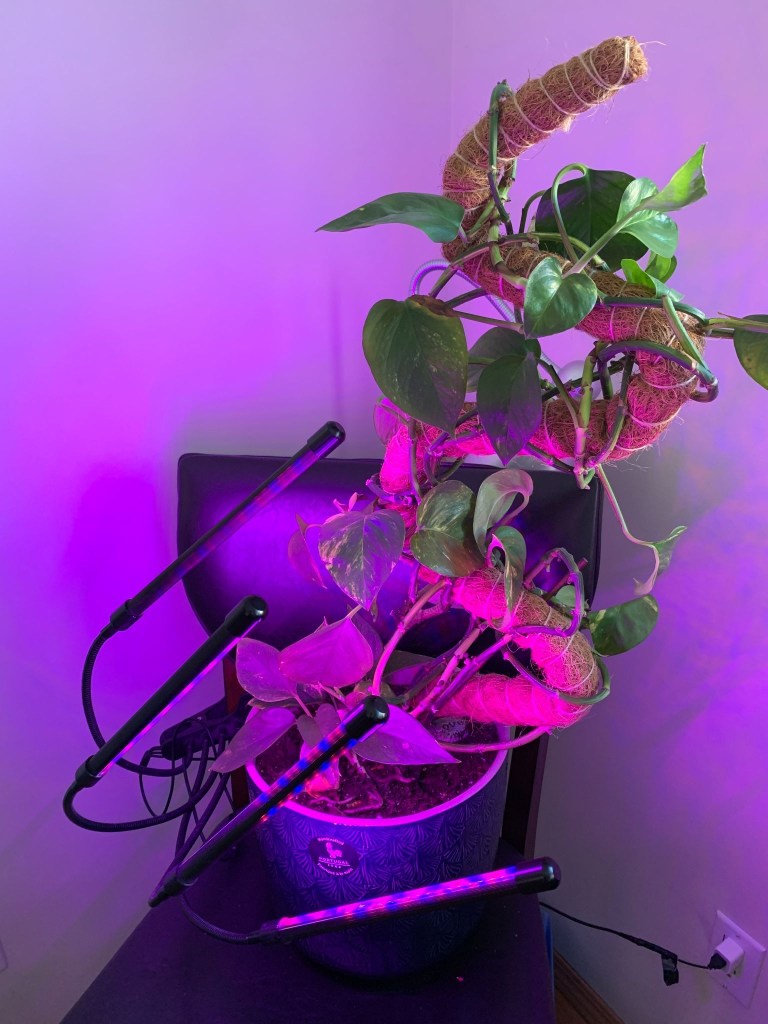
My Golden Pothos soaking up some synthetic sun.
Get a Moisture Meter
Buying a whole new set of pots with drainage may not be in the budget. For someone like me who has 50+ plants I can’t possibly repot them all and it’s also not a great time to do it. A better solution might be to invest in a water metre instead. You can check your soil regularly to make sure that they’re not being over or underwater. Most moisture meters go for between $10 and $30 although cheaper models may be less accurate.
How it works?
Most moisture meters measure soil moisture by checking how easily electricity flows between or around a set of metal probes inserted into the soil. Water conducts electricity better than air, so:
- More water = higher conductivity (wetter reading)
- Less water = lower conductivity (drier reading)
It’s also important to remember a few things when using a moisture meter.
- It doesn’t tell you when to water. It just tells you the moisture in the soil.
- Check multiple locations in the same pot because moisture isn’t consistent.
- Clean probes after each use to avoid transferring anything between plants.
Get That Plant Stand You’ve Been Dreaming Of
One of the cool things about people getting so into indoor plants in the last couple years is that there are a lot of different options available. No space is too big or too small. There are stands, shelves, macramé plant hangers, anything you can think of. You could even make your own shield if you have a few pieces of scrap wood, some screws and a little creativity (and a handy dad helps too). Maybe now is the time to make your plant space look a little more cohesive, to bring your plants together so it’s easier to water, to add plants to a space that was wasting good sunlight or just to bring you a little more joy.
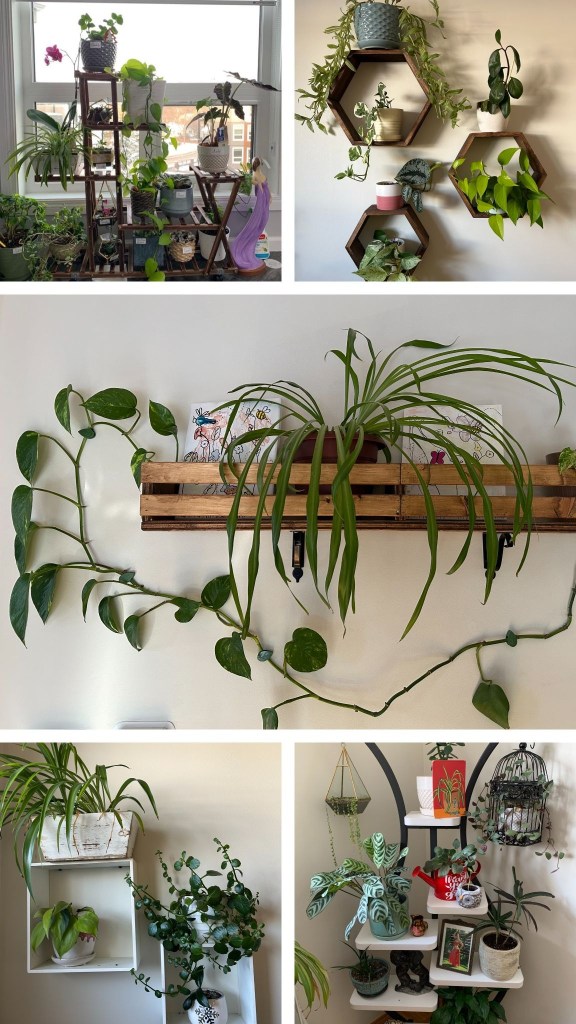
A few of my many different plant stands and shelves.
Buy Yourself A Plant
I am notorious for not paying for plants. I will get a cutting from anyone and anywhere. Some of my favourite plants came from a single leaf that I rooted myself. There’s a certain pride in seeing your plant flourish from a single leaf into a giant corner filling beast.
But every now and again I treat myself to a plant that I’ve had my eye on. Is it almost always on sale? Absolutely. I don’t think I’ve ever paid full price for a plant before. But if paying $50+ for a single plant makes you feel good then you should do it! Buy that plant you’ve been waiting for! Who am I to judge?
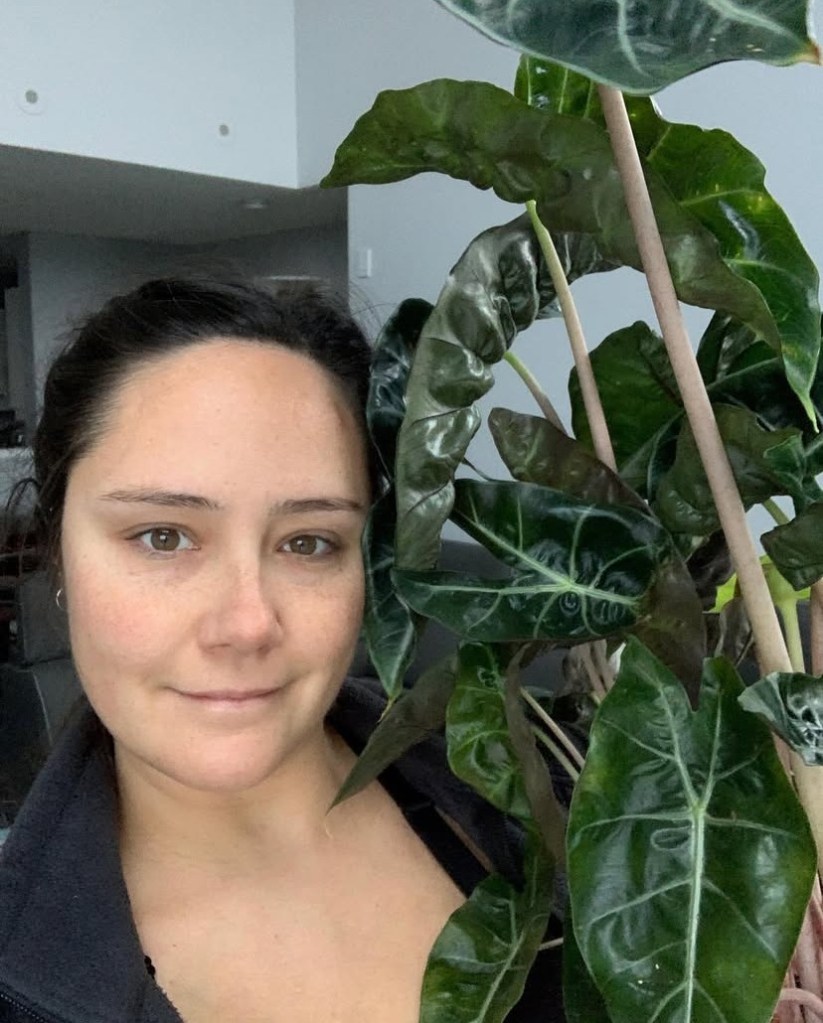
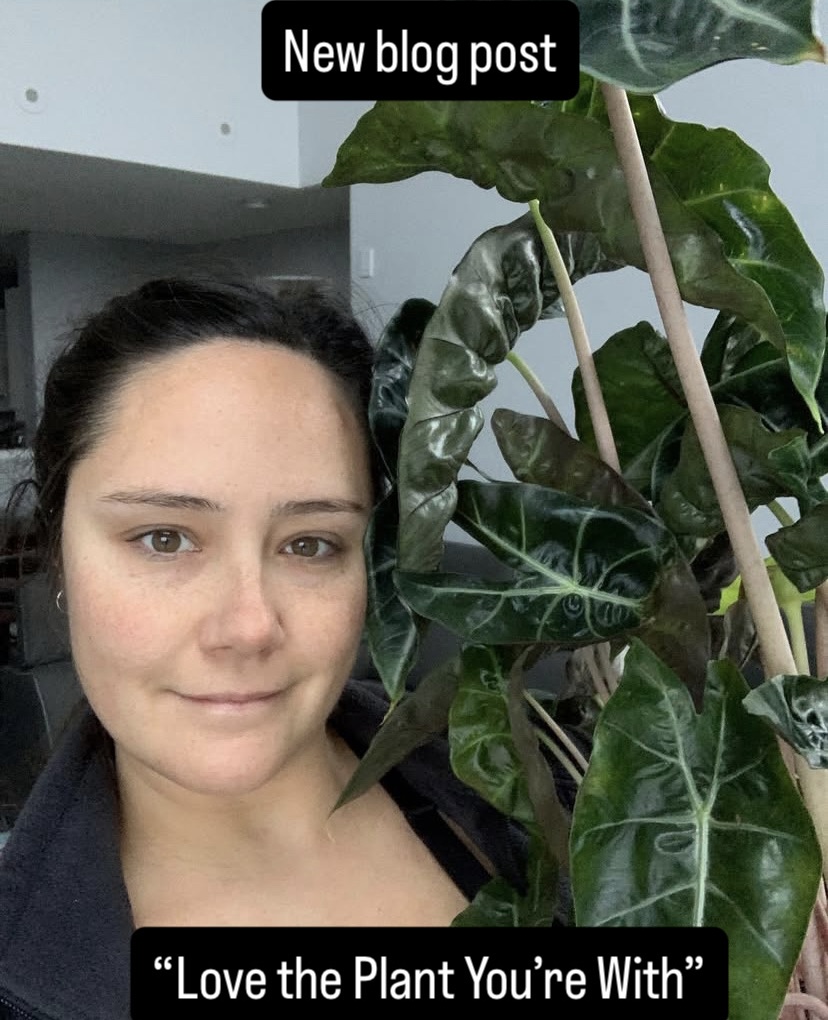
One of the few plants I’ve purchased. It is an alocasia micholitziana. I bought it as a “I’m pregnant and tried gift for myself” and I’ve had it for 3 years.
Love the Plant You’re With
While all of us would absolutely love to have a robust plant allowance, not all of us can afford to invest in this hobby. Unfortunately, we have to choose bills and groceries and there’s nothing left at the end of the month for indulgences like this. So instead of spending money, maybe this Valentine’s Day you spend some time with the plants you already have instead.
Remove dead growth. Dust off its leaves. Check for pests. Top up its soil. Add a little fertilizer (well…..maybe wait until March). Chat with it or play it some music (studies say it actually helps). Or just take an extra minute while you’re watering to appreciate the plants you have that bring you beauty and joy.
I guess what I’m really trying to say is, this Valentine’s Day, “love the plant you’re with”.
Photos in this article were taken by Heather Morren. Information was sourced from a wide variety of online resources. Please ask, should you wish to see a full list.

 Heather’s Gardening Service
Leave a reply to hchayden28 Cancel reply