Written by Heather Morren
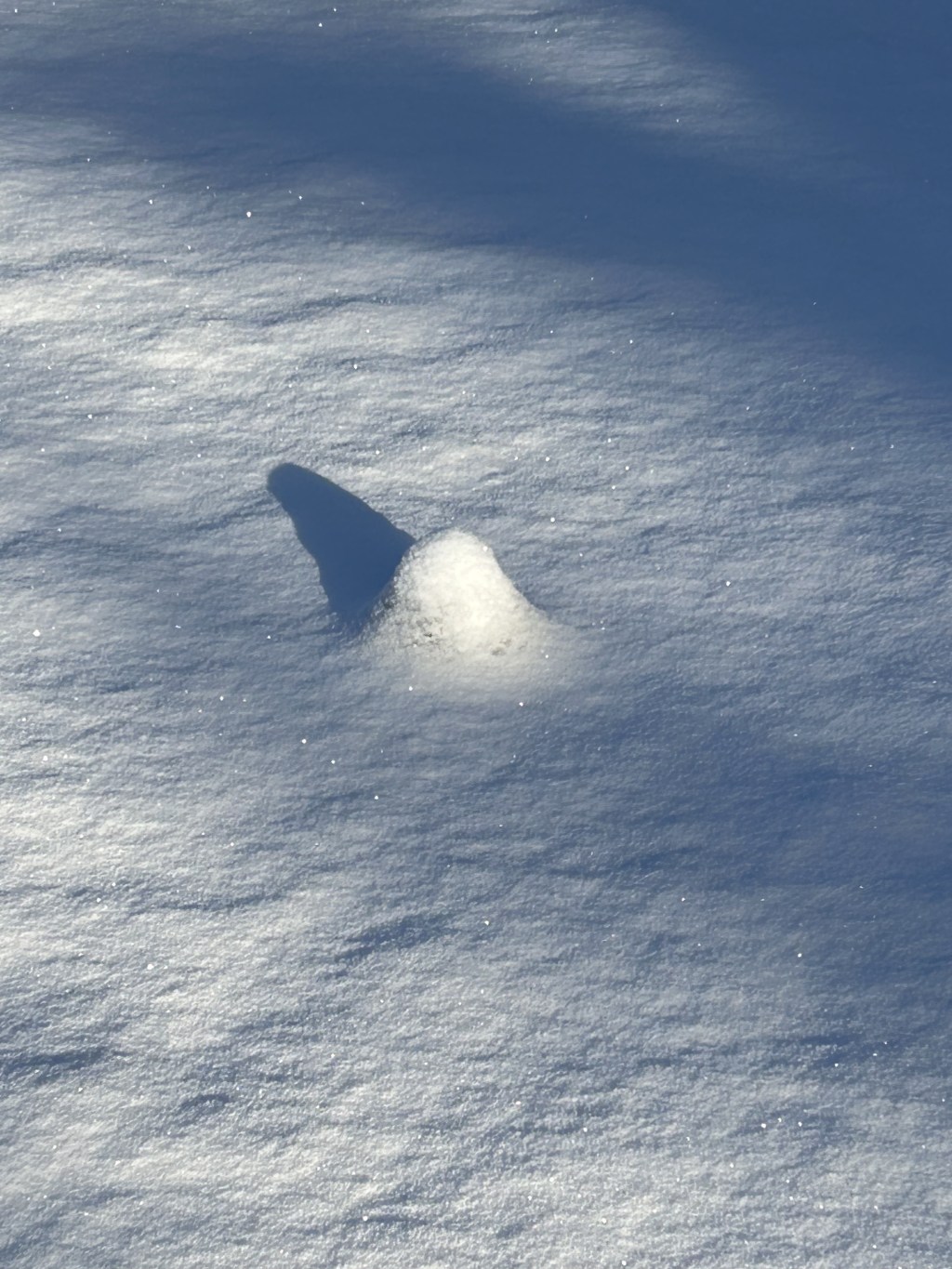
Boxing Day 2025. I had just finished shoveling for what seemed like the 1,000th time. As I took a break to look out over the gleaming white snow, and marvel in its beauty, I noticed this single bump in the snow, so out of place. It made me smile as I recalled a comment I had made in a September 26 post encouraging gardeners to “leave perennials over winter as it can add visual interest”. “Such visual interest,” I thought with a laugh. I could not have predicted then that it would all be completely buried with nothing left to see.
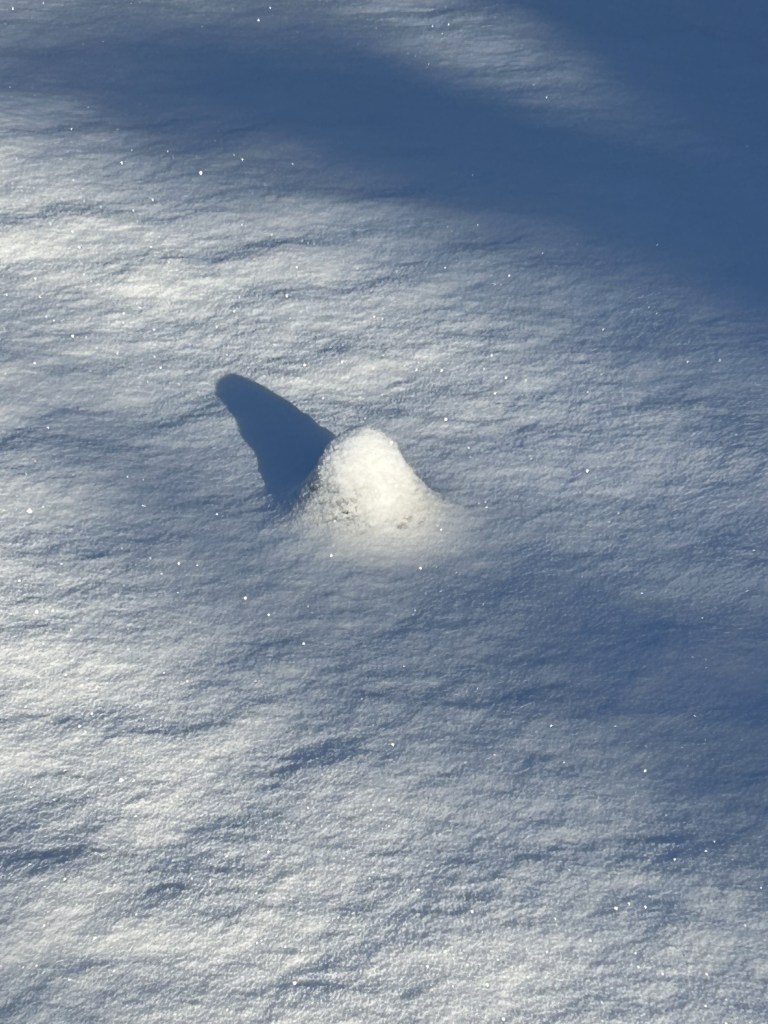
The aforementioned bump
All the snow that had fallen for days on end. All the frosty breezes that had kept me indoors. All the shovelfuls of snow that I tossed on the ever growing snow banks beside my drive way. They all threatened to drag me into a place of despair. Why do we live here where the air hurts your skin? Where you’re stuck inside for months on end? Where the sun is gone before 5pm?
But the sunlight glistening off that little bump was enough. Enough to remind me that there is life below those drifts of white just waiting for spring to come. Enough to remind me to trust the process.
In theory, “winter interest” means seed heads catching frost and grasses swaying in the wind. In reality, this winter it means a single lump poking through the snow. But leaving plants standing tall under the snow is still important. Those hollow stalks provide cover for insects waiting out the cold. The denser brush create homes for rodents sleeping all cozy under the snow. Those seed heads we are so tempted to cut back also become incredibly important food sources for birds like chickadees, sparrows and finches during the coldest days.
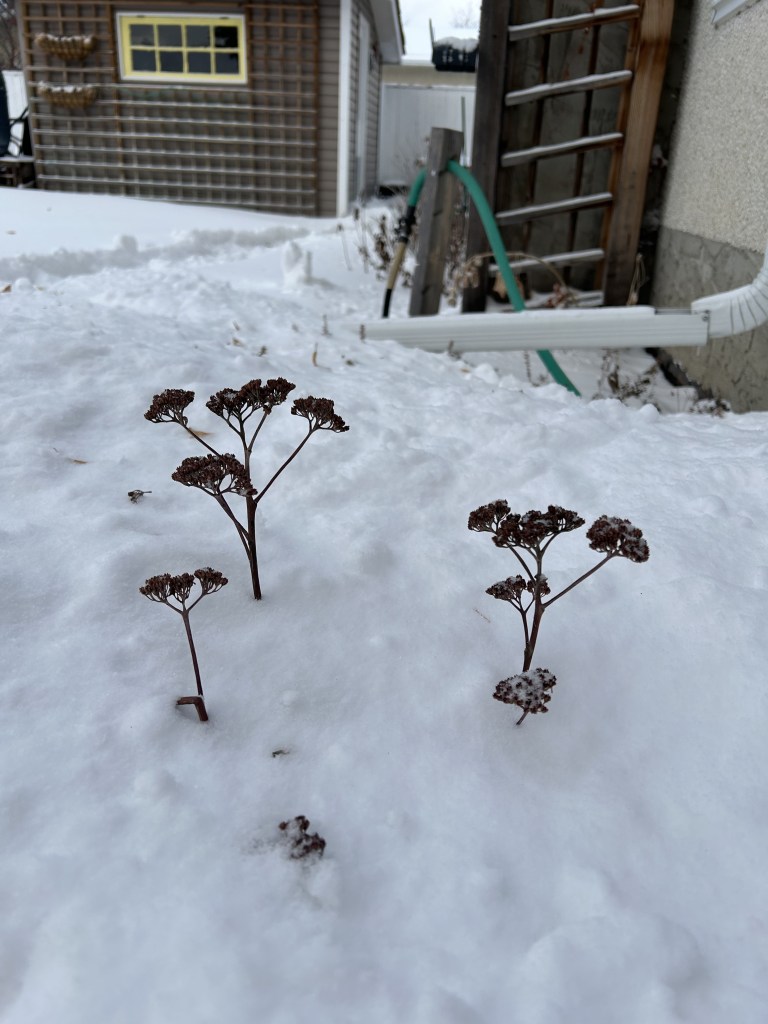
Stonecrop seed heads peaking above the snow.
Standing plant material has other benefits too.
- It traps snow which insulates roots and prevents freezing and thawing cycles
- It helps keep soil temperatures more stable
- It helps prevent erosion caused by snow and ice compacting on the soil.
- It provides the soil with nutrients in the spring as the plants break down and return to the place from which they came.
And perhaps most reassuring of all is that all that waiting is actually where the garden lays the groundwork for the spring. Leaving “visual interest” actually provides your garden with much needed structure.
- They mark where plants will return, placeholders, showing where perennials will emerge so the garden doesn’t feel empty or undefined while new growth is still below the surface.
- They give the garden shape before it turns green. Even without leaves, old stems and seed heads provide height and form, helping the garden look intentional rather than bare in early spring.
- They protect emerging growth protecting tender new shoots from wind, late frosts, and sudden temperature swings as plants begin to wake up.
- They guide thoughtful spring cleanup, helping gardeners see what’s truly ready to be cut back and what still needs time, making spring cleanup more deliberate and less disruptive.
What looks like nothing much now is actually shelter, food, insulation, and a promise of what’s to come. The garden may seem quiet, but it’s far from empty. What we can’t see in moments like this is that the garden hasn’t actually stopped, it’s just doing a very important job, resting.
There’s probably some deep and meaningful underlying message here. Something about slowing down, letting things unfold in their own time, and resting when needed. I won’t pretend to know the answer but, the garden seems to be sure of itself. I’ll take a hint and trust the process.
Photos in this article were taken by Heather Morren. Information was sourced from a wide variety of online resources. Please ask, should you wish to see a full list.
 Heather’s Gardening Service
Leave a comment