
Written by Heather Morren
Many people think pruning is just about keeping shrubs, hedges, and flowering plants looking neat and tidy. While that’s true, pruning does so much more than just improve appearances. Cutting back your plants at the right time can actually make them healthier, more productive, and better prepared for the changing seasons.
Late summer is a great time to give your garden a little extra care as the heat begins to ease. Read on to learn why pruning matters, which plants benefit from a late summer trim, and what to leave alone until next season.
Why Pruning Matters
Pruning is essential for supporting long-term plant health and growth. Late summer pruning, in particular, is useful for:
- Rejuvenating tired plants that have bloomed earlier in the season.
- Improving air circulation, which lowers the risk of disease and fungal problems.
- Encouraging sturdy root systems as plants begin to slow down for fall.
- Preparing your garden for dormancy, so plants return stronger next year.
What to Prune in Late Summer
Not everything should be cut back now, but many plants benefit from a gentle trim or deadheading in August and early September. Here are a few examples:
- Perennials: Snip back faded flowers to encourage a second flush of blooms or tidy them up before fall. (e.g., delphinium, Maltese cross, day or tiger lilies)
- Shrubs: Lightly shape non-spring blooming shrubs like boxwood or spirea to control their size and appearance.
- Roses: Deadhead and remove leggy growth to keep them flowering longer.
- Vegetables & Herbs: Prune basil, mint, and tomatoes to boost harvest and airflow.
- Annuals: Pinching back leggy stems or removing spent blooms helps extend their colour into early fall.

Cutting back spent blossoms on a climbing rose bush
What Not to Prune in Late Summer
Some plants need their foliage intact going into fall, or they’re vulnerable to stress and disease if pruned too late in the season. Avoid trimming:
- Spring-blooming shrubs like lilac or forsythia — you’ll cut off next year’s buds
- Trees and shrubs that are vulnerable to disease (e.g., oak, elm, maple).
- Plants that need time to harden off before frost like evergreens, tender perennials, (e.g. lavender, sedum, salvia greggii), and fruit trees
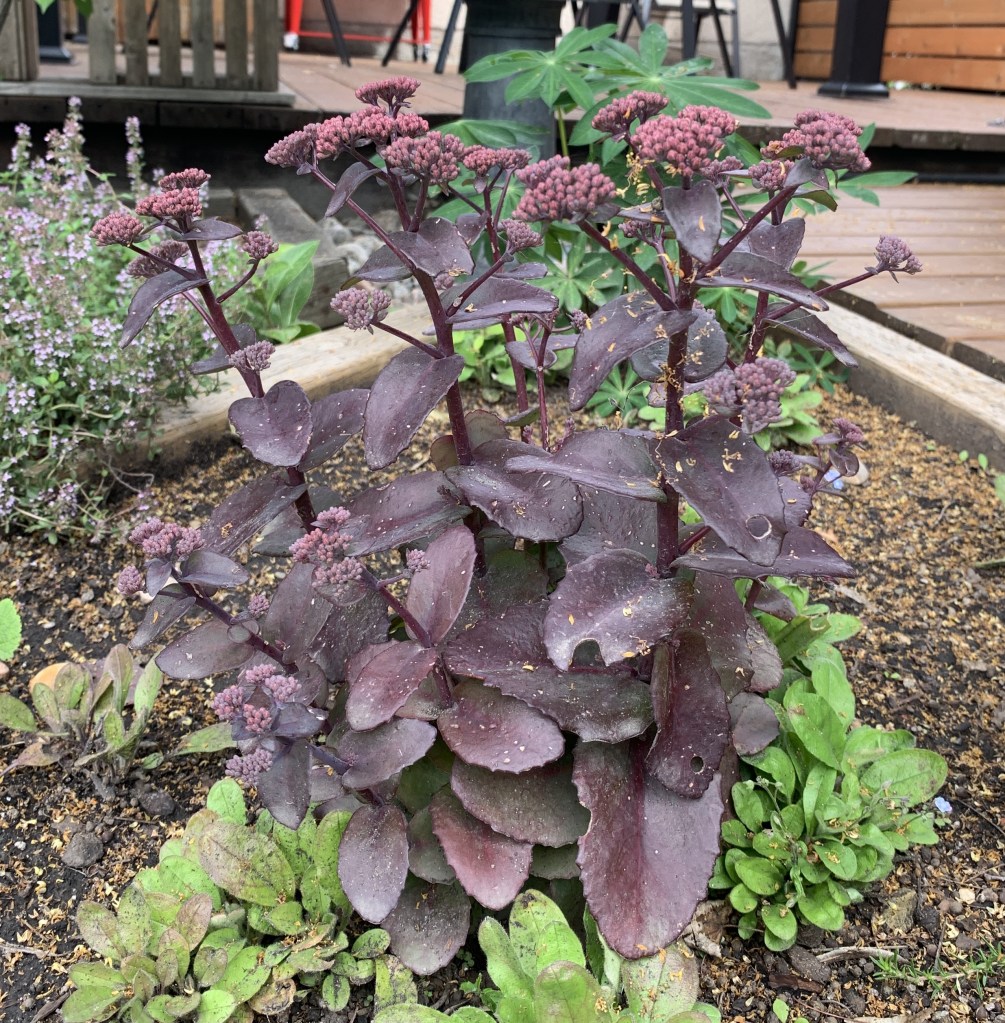
Sedum ‘Purple Emperor’
Best Practices for Late Summer Pruning
To get the most out of your efforts and avoid damaging your plants, keep these tips in mind:
- Use sharp, clean tools to make clean cuts and avoid spreading disease.
- Prune in the early morning or evening to reduce heat stress on plants.
- Never remove more than one-third of a plant’s total growth at once.
- After pruning, water deeply to help plants recover and reduce shock.
- Clean your tools with rubbing alcohol or disinfectant between plants.
Tools You’ll Need
- Hand pruners/secateurs or scissors for stems and small branches
- Loppers for thicker or woody growth
- Hedge trimmer can come in handy if doing a larger project, like hedges
- Gardening gloves for protection
- Disinfectant, like rubbing alcohol, for cleaning blades between uses
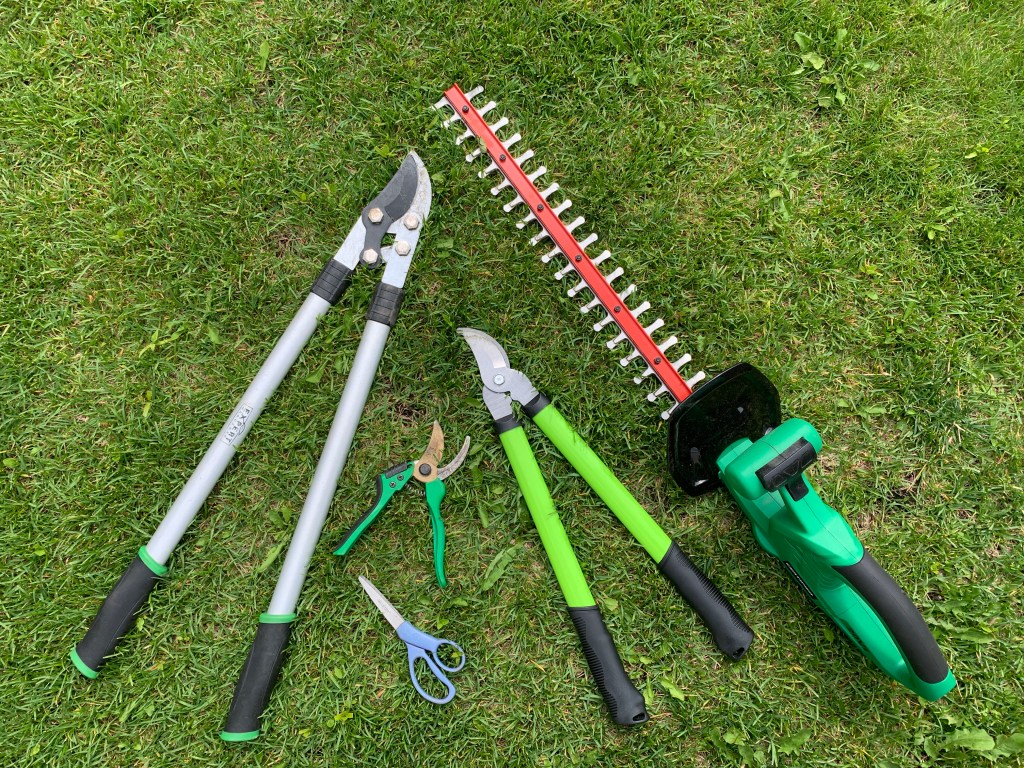
Left to right: bypass loppers, hand pruners/secateurs (top), scissors (bottom), bypass loppers (smaller), battery powered hedge trimmer
Common Mistakes to Avoid
Even a well-intentioned trim can do harm if done incorrectly. Watch out for:
- Over-pruning plants that are already struggling with drought or stress.
- Cutting too close to buds or main stems, which can cause dieback.
- Pruning in full sun or extreme heat, which increases stress and water loss.
In short, strategic late summer pruning offers a range of benefits. It promotes healthy growth, encourages fresh blooms, prevents disease, and gets your garden in shape for fall. Just be mindful of what not to prune and follow best practices to keep your plants happy and thriving.
Photos in this article were taken by Heather Morren. Information was sourced from a wide variety of online resources. Please ask, should you wish to see a full list.

 Heather’s Gardening Service
Leave a reply to hchayden28 Cancel reply