
Written by Heather Morren
Keeping Your Garden Thriving Through the Summer Peak
After months of planning and preparing, summer is finally here! Now it’s time to sit back and enjoy your garden, right?
Well, maybe not yet. Unfortunately, or fortunately for people like you and me, gardening is not a hobby for the lazy. There is ALWAYS something that can be done to keep your yard in ship shape.
July is a critical turning point in the season. The weather is getting hotter. The sun is staying out longer (and so are the mosquitoes). Gardeners must take action now or risk burnout (to plants and gardeners alike). Here are some tips and reminders to keep your garden healthy and to give you some downtime to actually enjoy your yard.
1. Inspect Your Plants
- Check for signs of stress like yellowing, wilting, or stunted growth
- Look underneath leaves for pests, like aphids and beetles (red lily beetles are the bane of my existence) or fungal spots, like blight or mildew
- Remove diseased leaves immediately and isolate affected plants if needed
- For pests, use natural or organic control methods when possible and encourage beneficial insects like ladybugs and lacewings
2. Prune, Deadhead, Support and Contain
- Trim back leggy annuals and perennials to encourage new growth
- Deadhead flowers to promote continued blooming
- Perform light summer pruning for shrubs and vines (with caution! Don’t over do it or your plants may not make a come back)
- Stake or cage floppy or top-heavy plants like tomatoes, dahlias, and hollyhocks and tie up vines or climbing plants
- Thin crowded areas to improve air circulation to reduce pests, fungal diseases, and make later maintenance easier

3. Weed Control
- By now, your weeds are likely in full force—pull them before they go to seed so they don’t spread more
- Weeding is best done after rain or watering. It’s messier but makes weeds easier to remove
- Adding fresh mulch will also help to suppress regrowth
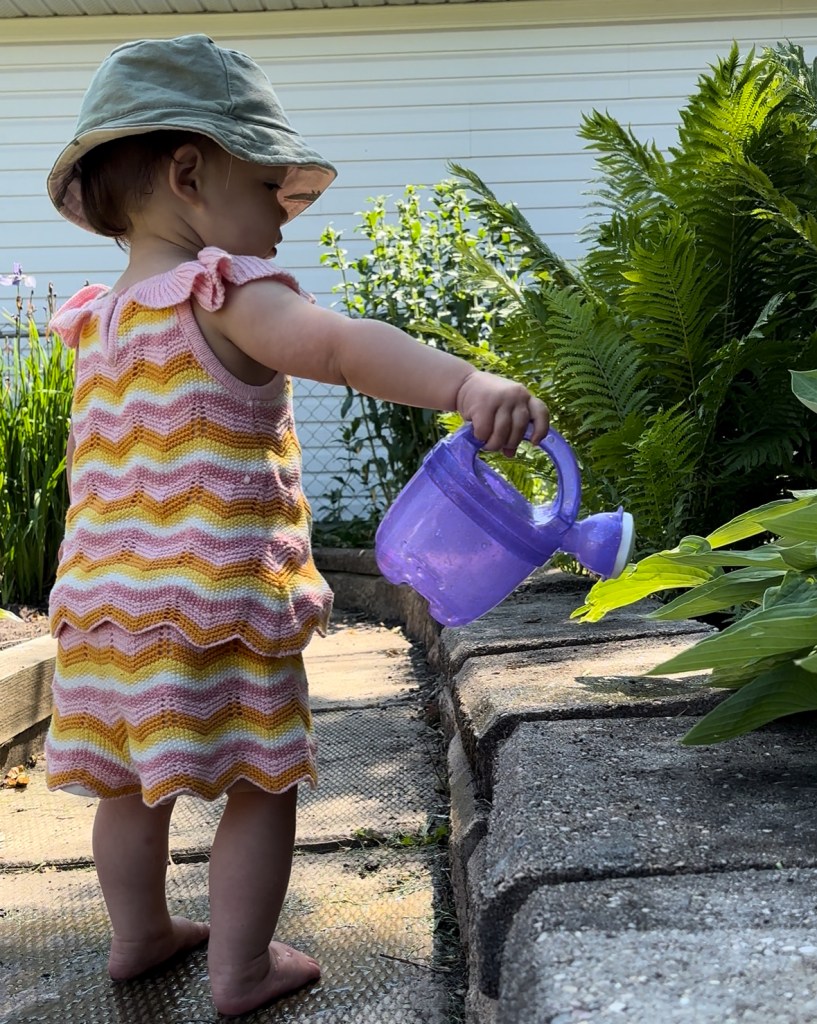
4. Water Wisely
- Adjust watering routines to early mornings or evenings to avoid the heat of the day
- Deep watering is more beneficial to your plants, as opposed to frequent shallow watering
- Check irrigation systems and hoses for leaks or clogs
- Replace or top off mulch to retain moisture and keep roots cool
5. Feed and Fertilize
- Replenish nutrients lost to fast summer growth by using compost, a balanced fertilizer, or plant-specific feeds
- Make sure to fertilize containers more frequently because nutrients leach faster in containers
6. Harvest Regularly
- Picking ripe produce encourages more production so pick those herbs, raspberries, and leafy greens
- Remove overly mature or rotting vegetables to prevent pests
- This may apply later in the season once more produce comes in, but remember to share excess fruits and veggies with neighbors or donate to local food banks if you, say, planted way too many cucumbers (I wouldn’t know anything about that…..)

BONUS: Plan Ahead for Fall
- Take notes on what’s working and what’s not. Write it down. You tell yourself you will remember but you won’t!
- Order seeds or supplies before the rush. It will make planting your seeds in early spring so much easier if you already have everything on hand.
Maintaining a garden is a challenging job. It is time, energy and resource consuming but also extremely rewarding (and I’m not just talking about all the delicious beans and carrots you grow in your garden). Hopefully doing some of this yard maintenance now will make it so that you will have more time to enjoy your hard work later in the season.
Happy gardening!
Photos in this article were taken by Heather Morren. Information was sourced from a wide variety of online resources. Please ask, should you wish to see a full list.


 Heather’s Gardening Service
Leave a comment