
Attracting Birds, Bees, and Butterflies
Written by Heather Morren
When you think of pollinators, most people think of bees, but there are many other creatures that also do the very important job of pollinating including bees, butterflies, moths, birds, other insects such as beetles and flies, and even bats.
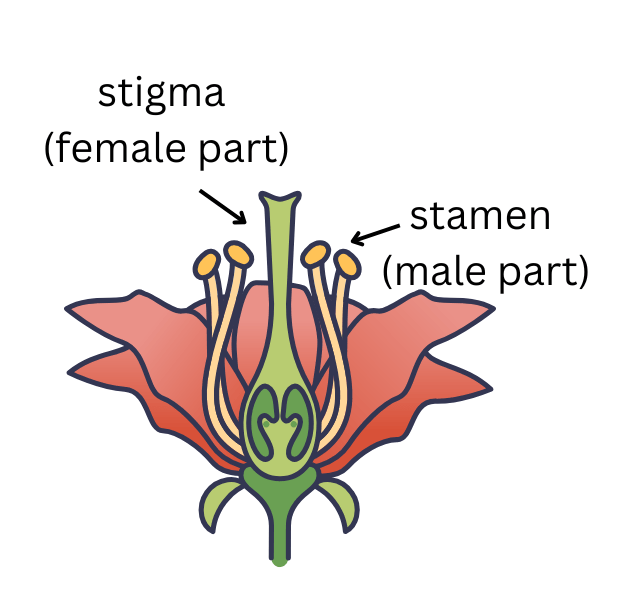
Pollinators have an incredibly important job. Their role is to carry pollen from the male parts of a flower, called a stamen, to the female parts of a flower, called the stigma. This transfer of pollen results in fertilization, which helps to produce fruits, seeds, or seedlings.
Pollinators are primarily attracted by two things:
1) nectar, a sugary substance found inside flowers that provides pollinators with a sugar boost and amino acids and,
2) pollen, a powdery substance that sticks to pollinators and is high in protein
In this article we will be focusing on flora you can plant in your garden to attract a variety of pollinators, such as birds, bees and butterflies.
Attracting Birds as Pollinators
Pollination by birds is called ornithophily, which essentially means “pertaining to birds”. The most common bird that serves as a pollinator is a hummingbird. Here in Alberta we have three varieties: ruby throat, calliope, and rufous. They use their long beaks to reach deep inside the flower to collect the sweet, sticky nectar.
Birds are most drawn towards flowers that are red, white or orange in color with a large trumpet shape.
Examples of flowers you can plant that will attract birds include salvia, morning glories, honeysuckle, bee balm, columbine, fuchsia, bleeding hearts, lilies, petunias, delphinium and lupine.
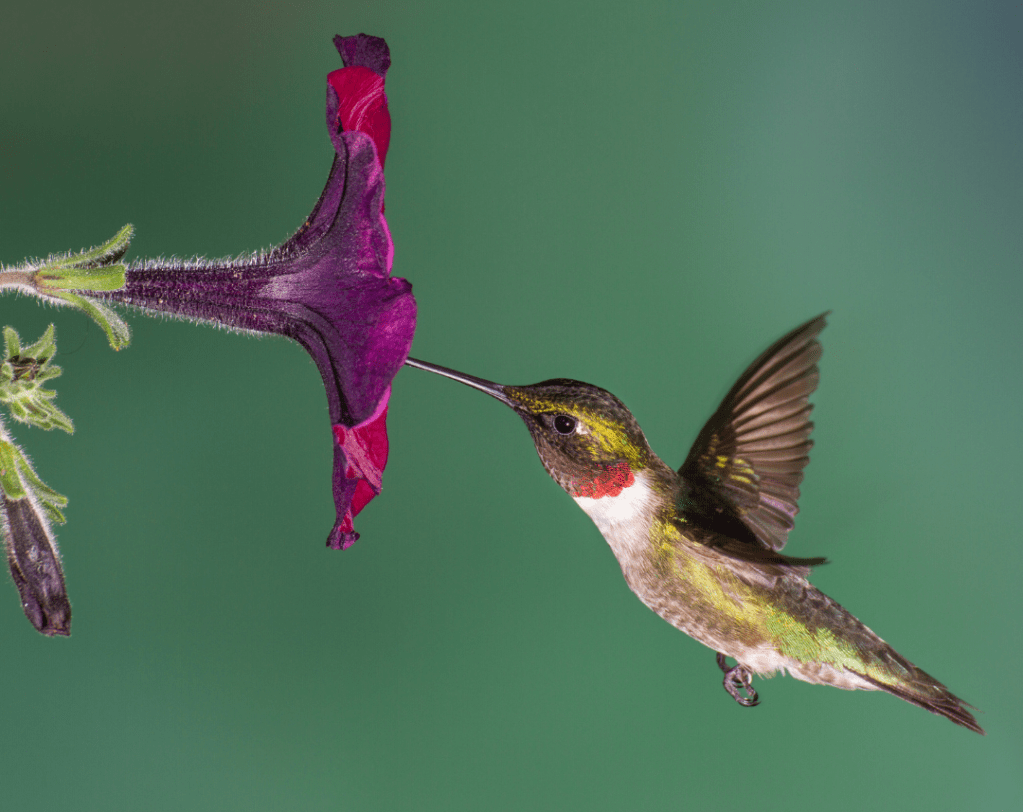
A ruby throated hummingbird sampling nectar from a fuschia colored petunia
Attracting Bees as Pollinators
Alberta is home to over 300 species of bees! But not all of those bees are good pollinators. The most effective pollinating species include bumblebees, honey bees, mason bees and leafcutter bees. Bees not only eat pollen, they also inadvertently collect it on the comb-like structures on their legs, as well as on their fuzzy bodies.
Bees tend to be most attracted to plants that have white, yellow, or blue flowers. It also helps if the flowers are shallow and tubular and have a “landing pad” so the bee can take a little break while trying to reach the nectar and pollen within. Those fat little bodies are heavy!
Examples of flowers you can plant that will attract bees include lavender (I can attest to this. My lavender is always crawling with bees in the late summer), coneflower, black-eyed Susan, bee balm, salvia, cosmos, zinnia, marigolds, and crocus.
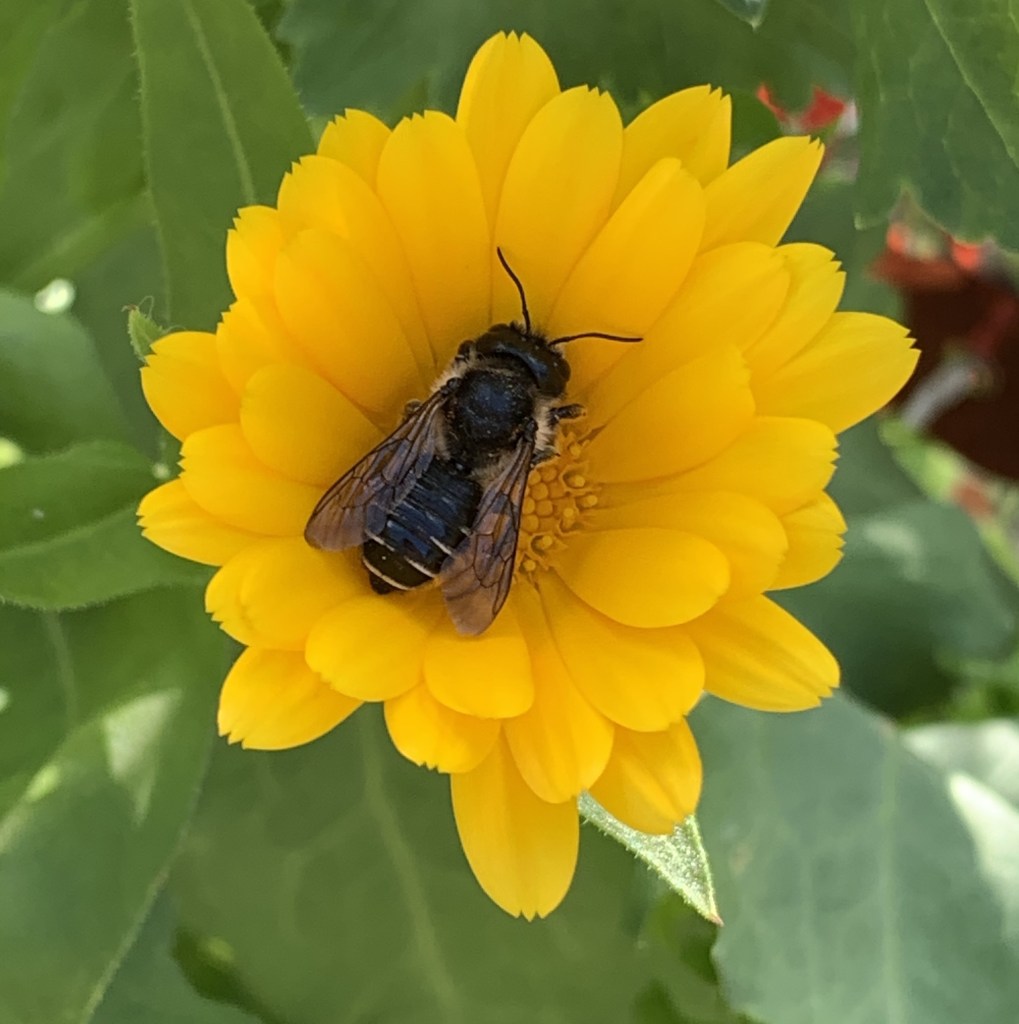
A leafcutter bee enjoying a rest and a meal on a pot marigold.
Attracting Butterflies as Pollinators
If you thought there were a lot of bee species, you may be surprised to find out that 3000 species of butterfly call Alberta home. Some of the best pollinators include swallowtails, painted ladies, monarchs, cabbage whites and mourning cloaks.
Butterflies tend to prefer brightly colored flowers, such as reds and purples, that have a narrow tubular shape with nectar deep inside it.
Examples of flowers you can plant that will attract butterflies include milkweed, butterfly weed, Joe-pye weed, zinnias, petunias, and asters. They also enjoy similar flowers to bees such as bee balm, cosmos, marigolds, coneflower, and crocus.
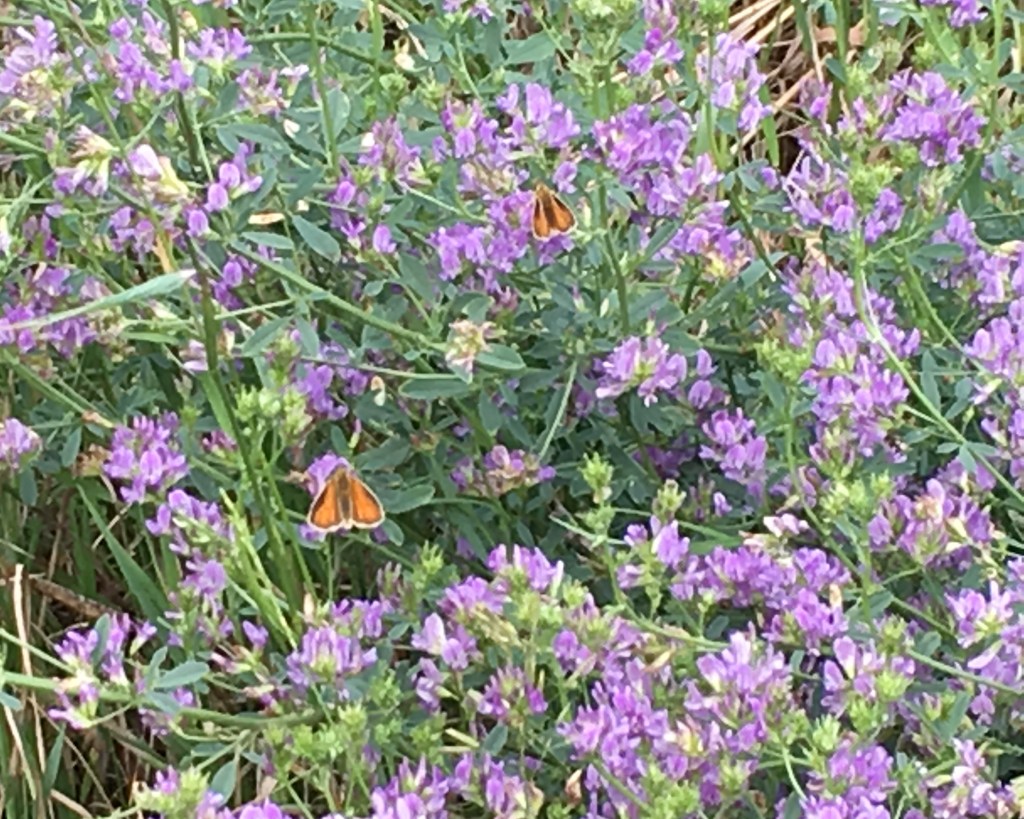
Police car moths (gnophaela vermiculata) having a taste of some wild alfalfa (Medicago sativa)
What else can I do to attract pollinators?
Having plants that birds, bees and butterflies enjoy is just step one in ensuring excellent pollination in your yard. There are other steps you can take to ensure your pollinating friends enjoy coming back to your yard again and again.
1) Food
While providing preferred flora helps, there are some other things you can do to assist pollinators such as clustering flowers together to help them access more food more easily and so they can return to a flower they know how to enter.
You can also diversify to attract a wide variety of pollinators. This can also help stagger the blooms which will provide pollinators with food throughout the entire gardening season.
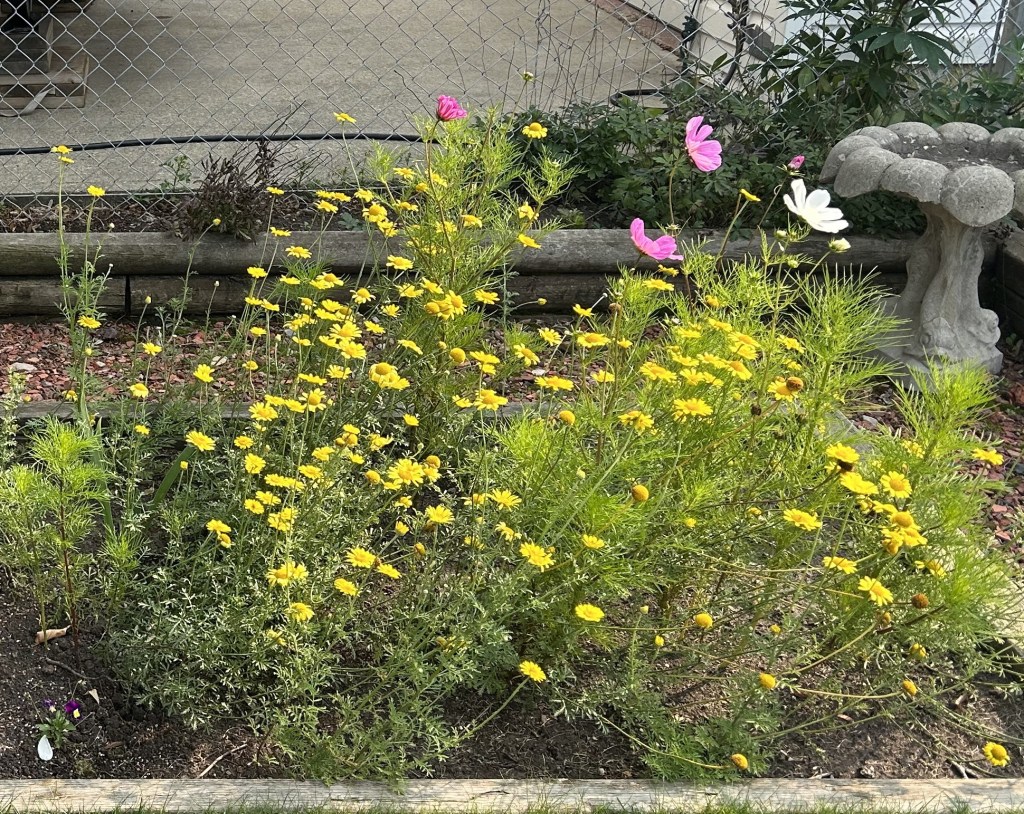
Cosmos and Dyer’s chamomile, a favorite of many butterflies, have been planted side by side. The chamomile tends to bloom in July and August, while cosmos can bloom as late as September. A shallow bird bath with sloped edges can also be seen in the background.
2) Water
Providing a place for pollinators to reliably access drinking and bathing water is essential. This can come in the form of natural springs, ponds, or puddles but it can also be man made. If you are creating a watering spot for your pollinators, ensure that it is shallow and has a sloping edge so they can easily get in and out.
3) Shelter
Your little fuzzy and feathered friends also need a place to hide out when the weather turns inclement or if predators are about. Mulch, such as dead leaves and grass clippings, is a great shelter for many pollinators (and it saves you some trouble). However, using too much mulch can be a deterrent. Layering your garden to include plants of varying sizes provides a home for animals of all proportions.
If you’re looking for a little woodworking project, you could also build a bee hotel, which encourages solitary, non-aggressive bees to nest on your property.
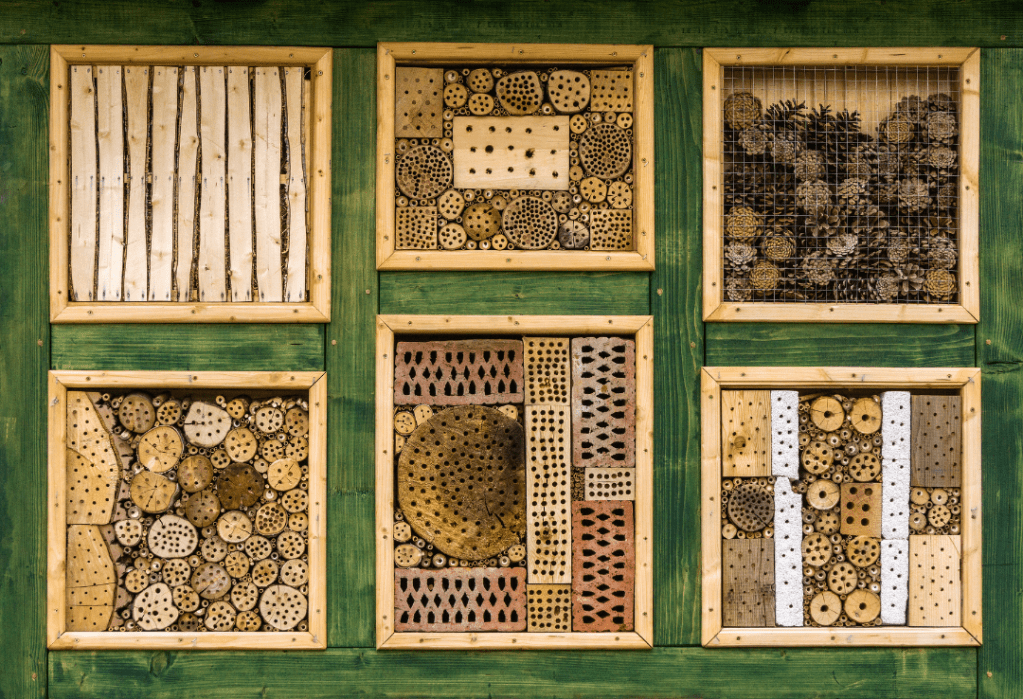
Bee hotels can be made out of a wide variety of natural materials including scrap wood, pinecones, and hollowed out stems.
Pollinators are incredibly important to our ecosystems. They help create the foods we eat, such as vegetables. They keep plant and animal communities healthy and productive by increasing genetic diversity in plants and by being a major source of food for a variety of birds, mammals, insects and reptiles. Planting a pollinator friendly garden does more than just beautifying your yard, it helps Mother Earth and all of her inhabitants.
Photos in this article were taken by Heather Morren and copy right free photos were sourced from Canva. Information was sourced from a wide variety of online resources. Please ask, should you wish to see a full list.
 Heather’s Gardening Service
Leave a comment