Written by Heather Morren
Gardening is one of those hobbies that has a pretty low barrier for entry. All you really need is a swath of soil (that you’re allowed to dig around in), access to water, some sunlight, and some seeds or plants.
But when it comes to tools for gardening, the possibilities seem to be endless. You could stand in the seasonal aisle for eons wondering which tools you need, what some of them are even for and why anyone would pay that much for it. Does that standing weed tool really make gardening THAT much easier?
Don’t worry! To make it a little easier for you to get started on your gardening journey, here is my top 5 list of tools every gardener needs:
Weeding Tool
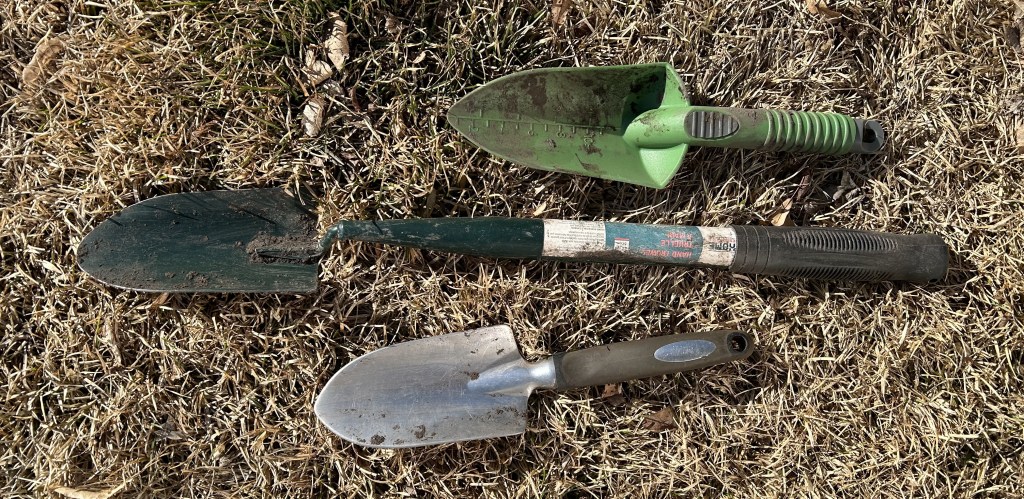
The weeding tool is generally a long piece of metal with a forked end on one side and a handle on the other. Some are straight (bottom) while others have a bend in their shaft (top). Both work reasonably well but the curved one is definitely stronger and holds up better under pressure. This tool is great for removing stubborn weeds, especially dandelions. Stick the forked end onto the soil at the base of the intruding plant, then press the handle towards the ground, using the tool like a lever to pop that pesky plant out of the soil. I also like to use this tool to scrape around in loose soil or rocks and then collect the offending weeds by hand.

Trowel
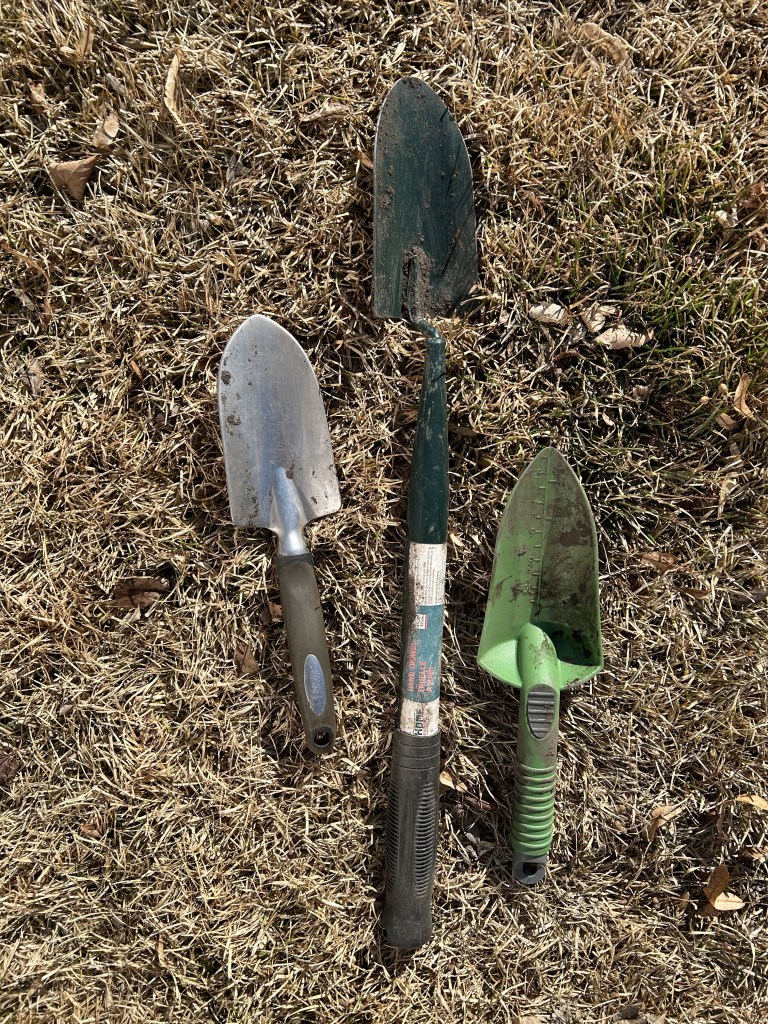
A trowel is another name for a small, hand held shovel. This tool is very useful for creating trenches for seeds, digging holes for new plants, digging up dead plants, or getting rid of large weeds or patches of weeds all at once. Trowels come in many sizes and materials. A strong, sturdy, metal hand shovel (left) will serve you best. The long handled trowel (center) has the benefit of being a longer lever for more power when digging but the skinny neck means it is not very strong and often bends when too much pressure is applied. A plastic trowel (right) is prone to breaking as well, especially when your dirt is rocky or filled with clay.
Mini Rake
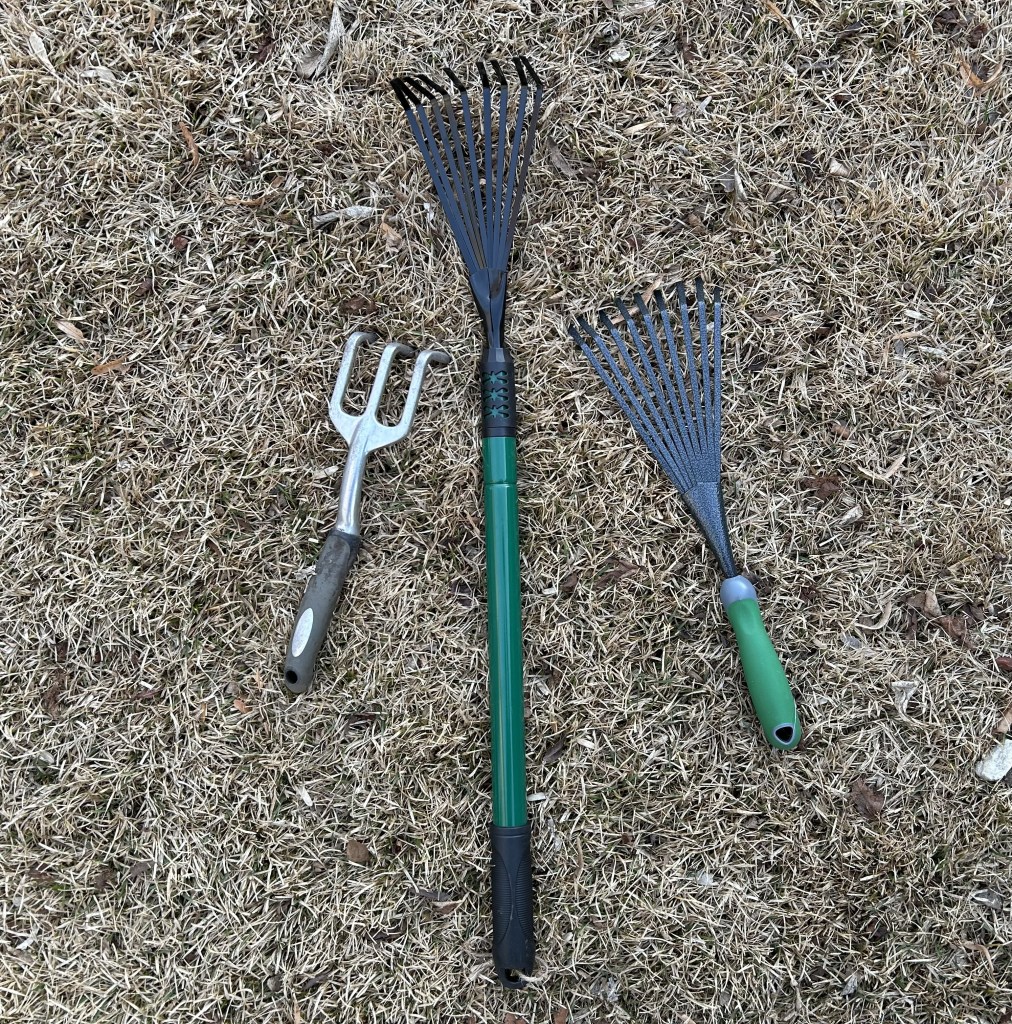
Mini rinks come in various types and sizes as well. You can buy them in the same length as your hand trowel and weeding tool. Those ones tend to have stiff plastic or metal tines like the one on the left. They are good for loosening up tough soil or removing leaves and debris from a relatively open space. Others can be as long as your arm and some are even telescopic, like the one in the center. These ones tend to have flexible metal tines. They are great for removing detritus from rocks, mulch or tight spaces. The tines bounce off of heavier objects like rocks instead of dragging them along.
I purchased my telescoping mini rake (center) from Dollarama for $4 and the smaller flexible rake (right) was $5 at Walmart. Although I have used other tools like this in the past, both tools photographed were purchased this spring so I can’t say much about the quality of this exact tool so stay tuned.
A set of three metal hand tools including a weeding tool, hand trowel and mini rake like the ones pictured below sell for $13 at Walmart and are very good quality. My set has lasted me three years and I have purchased a set for use by my contracted employees the last two years. So far only the weeding tool, which gets a lot of use, has broken from my oldest set when I dug into a particularly rough patch of earth.

Pruning Shears
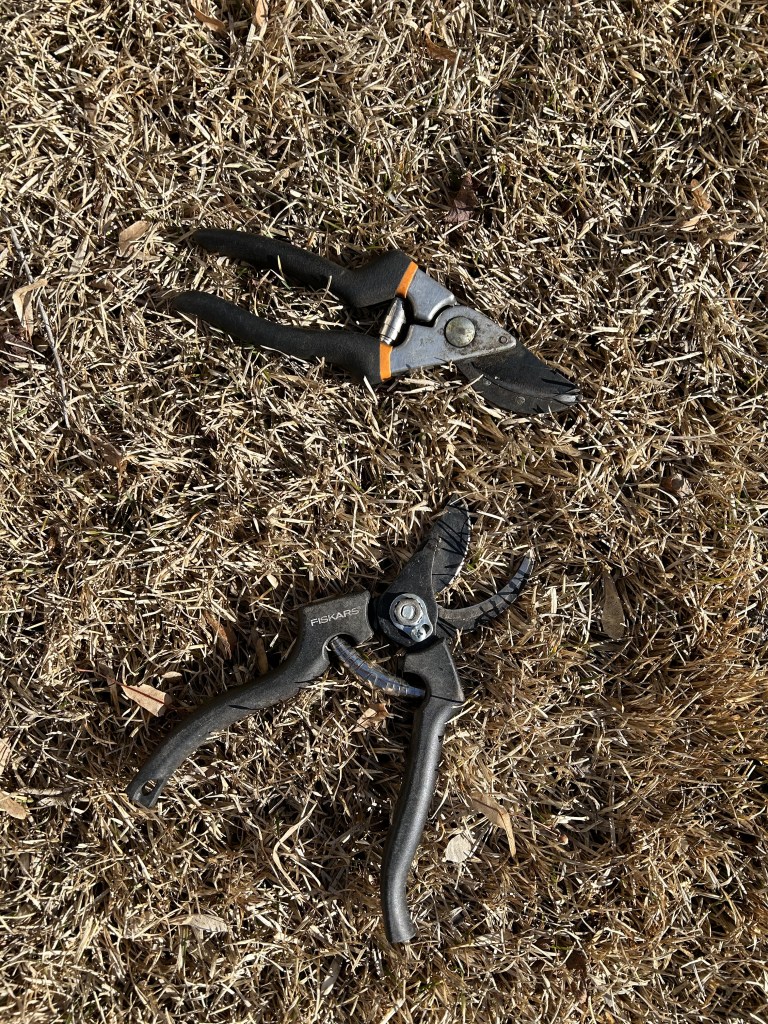
A good pair of pruning shears, or sécateurs, can be very handy. They can help you to cut back shrubs, smaller errant branches or trim back larger perennials in the fall. There are many things to look for when purchasing a pair of sécateurs. You will want ones with strong metal blades, preferably that you can sharpen in the future after you’ve used them all season. A comfortable handle is important as well. If you can buy a pair with rubber handles, they will be much more comfortable and durable than plastic. If you have smaller hands, consider a smaller pair. You will want to use them one-handed if possible so you can collect clippings as you go. A strong metal clasp for keeping them shut when not in use is also handy. The plastic clasps tend to break easily.
A reasonable pair of pruning shears like the top pair will run you about $5 at Walmart.
Gloves
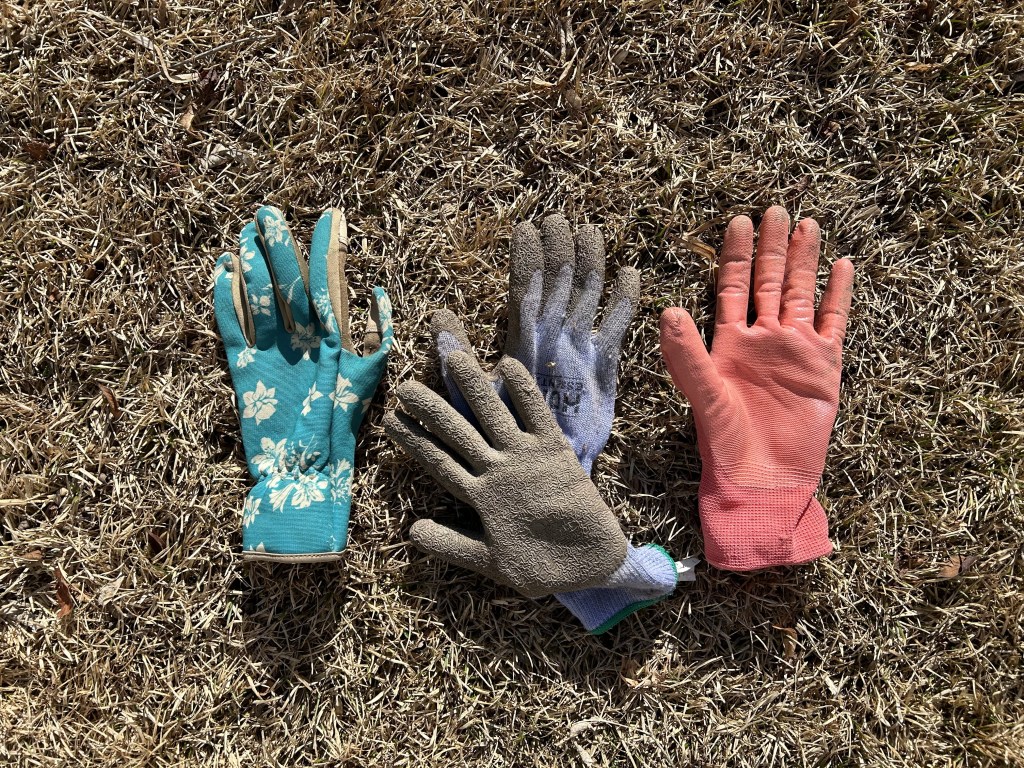
You may think that gloves are not a tool, but, actually, anything that you can use to make your job easier is considered a tool. Gloves are great for keeping your hands a little bit cleaner while working in the soil. They protect your hands from bugs, rocks, splinters, thorns and more. When purchasing gloves, there are many things to consider. Gloves that are strictly fabric (left) allow you to have more dexterity when picking small weeds. However, they do tend to tear quite easily in the fingertips. Gloves that are covered in latex or polyurethane (center and right) will be much stronger and take a lot longer to break but they make it harder to grab smaller objects. You can also get them with smooth surfaces or textured. There are also special leather gloves and long gloves that cover your forearms (not pictured) for pruning thorny plants like roses and raspberries if that’s something you are considering dabbling in.
The cheaper the glove, the more likely they are to fall apart easily. The more easily they fall apart, the more often you’ll have to replace them, which adds up. Gardening gloves range from a couple dollars a pair all the way up to $20 a pair. I spend about $5 per pair on the ones I like best (center) and they last me a couple weeks of continuous gardening before they get holes.
There you have it, a list of the top 5 tools you need to get started in your garden. Garden season is almost upon us so you better stock up soon. Happy gardening!
Disclaimer:
Although it may seem like it, I promise, this is NOT an advertisement for Walmart. You can buy many quality gardening tools at Canadian Tire, Rona, Home Depot, your local greenhouse or any other store that sells gardening products. I just happen to get most of my products from Walmart because I purchased my first set of tools from there and have found them to be really good quality for a very reasonable price.
Photos in this article were taken by Heather Morren. Information was sourced from my personal experience.

 Heather’s Gardening Service
Leave a reply to Christine Hayden Cancel reply