Written by Heather Morren
Happy New Year! Only 5 more months until gardening season begins!
With the joyful chaos of the Christmas season behind us, many plant lovers may find themselves welcoming the new year with a new plant.
I’ll set the scene:
The holiday festivities have wrapped up. Your well intentioned parent, sibling, aunt, uncle, cousin, or friend has purchased a vibrant red (or white or pink) poinsettia to add some Christmas cheer to their home. But, in reality, they have absolutely no idea how to care for this beautiful and sensitive central American plant and it is now slowly losing its leaves to eventually be tossed into the great green bin in the sky (yard).
Of course, the plant lover that you are, simply can’t let that happen to these delightfully colored shrubs. Either that, or they’ve been gleefully thrust upon you because you “like plants”. Be that as it may, just because you have 40+ house plants (who me?), doesn’t necessarily mean you know how to take care of this one in particular.
If you too have found yourself in this position, here’s some information to help you and your new found plant friend thrive in 2024.
But first…
The Poinsettia: A Brief History

The poinsettia has long since been regarded as a symbol of Christmas. In its native country of Mexico, the use of the poinsettia has been traced back to the 16th century. The story goes that a young girl, who was too poor to offer a gift in celebration of the birth of Jesus, gathered flowers from the roadside, among which grew beautiful red poinsettias.
From the 17th century onwards, Franciscan monks in Mexico used poinsettias in their Christmas celebrations as well, the shape symbolizing the star that guided the wise men to Jesus and the red color symbolizing the blood of Christ.
Poinsettias were first brought to the United States by Joel Robert Poinsett, their English namesake, in the 1820s and popularized in North America in the early 1900s by the Ecke family. In their native habitat, poinsettias can grow into shrubs or small trees as large as 4 meters in height. The Ecke family is credited with inventing a grafting technique that allowed poinsettias to grow into the stout and bushy plants we see today. Over 70 million poinsettias are sold in the US alone over the six weeks leading up to and including Christmas.
Caring For Your Poinsettia
Due to their long association with Christmas, people often forget that the poinsettia is a tropical plant so it does not actually fare very well in our cold North American climate. To give your poinsettia a chance at survival, it is best to place it in a bright, sunny spot, being careful not to allow its delicate leaves to touch the chilly window.
When choosing the location for your poinsettia, also consider if the spot is drafty or not. Poinsettias will not do as well near a door, a fireplace, or a heat vent.
Although they are tropical plants that like their humidity, you will find that your poinsettia can easily be overwatered and a waterlogged plant is never a happy plant. Root rot can set in very easily so be sure to check that your plant is indeed dry before offering it more water.
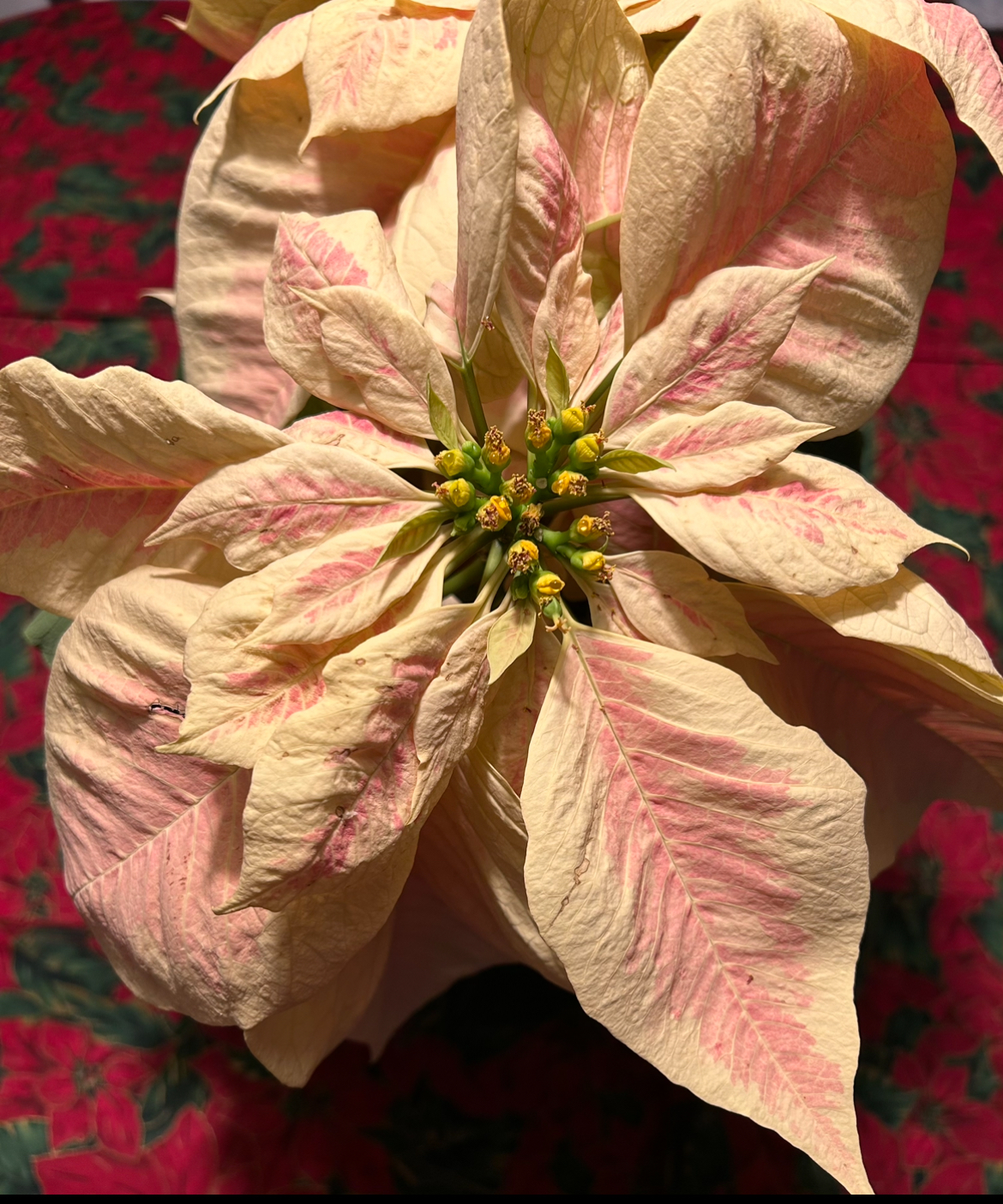
Many people mistake the red, white, or pink leaves of the poinsettia as the flower. While your poinsettia may continue to grow new and colorful leaves for months, the small yellow bundles in the center are the actual flowers and it can be difficult to get them to rebloom.
The New Year, and beyond….
The more savvy (and patient) plant aficionado may wish to try to get their poinsettia to bloom again for the following Christmas. If that sounds like you, give your poinsettia a hard trim in April/May, offering it limited water and a cool and light place to grow. A few times throughout the summer, pinch back new green growth. At the beginning of October, begin limiting the amount of sunlight your poinsettia is exposed to, aiming for 12 hours or less each day to encourage the poinsettia to start changing color.
With a little luck and a lot of hard work, your poinsettia may live to see another Christmas but don’t be surprised if you find it difficult to keep your poinsettia looking as bright and beautiful as the day it was bought. They are a challenging plant to care for. Wishing you and your poinsettia luck this 2024!
Photos in this article were taken by Heather Morren. Information was sourced from a wide variety of online resources. Please ask, should you wish to see a full list.