Written by Heather Morren
Gardening in Edmonton is challenging, to say the least. We have a short growing season, fluctuating temperatures, and occasional (ha!) late spring or early fall frosts. To make the most of our precious growing months, Edmontonians need to be smart about planting their gardens.
This is where companion planting comes in!
What is companion planting?
Companion planting is the practice of growing certain plants near or next to each other to enhance growth by attracting pollinators, repelling pests and improving soil quality without the use of chemicals. It is also known to even enhance flavor, in the case of fruits and vegetables.
Indigenous communities have used this technique for centuries, with the most well-known example being the Three Sisters, corn, beans, and squash, planted together to support one another.
Whether you’re growing a backyard vegetable garden, tending to raised beds, or making the most of a small patio space, companion planting is a great way to ensure your plants thrive in Edmonton’s growing conditions.
Let’s explore the best plant pairings, what combinations to avoid, and tips for making the most of your space.
Vegetables & Their Best Companions
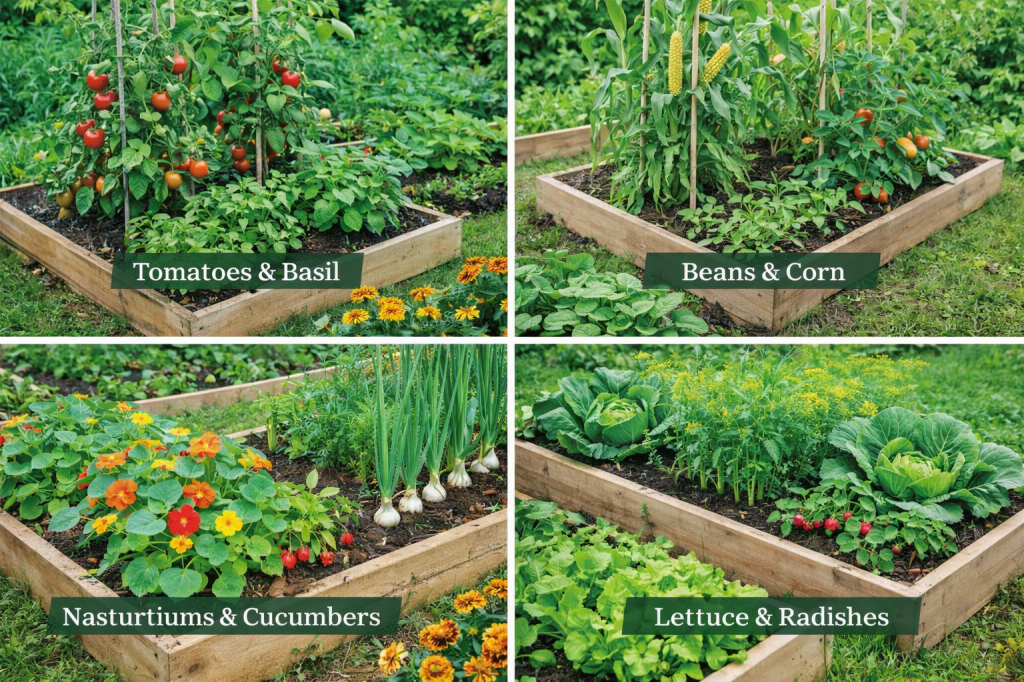
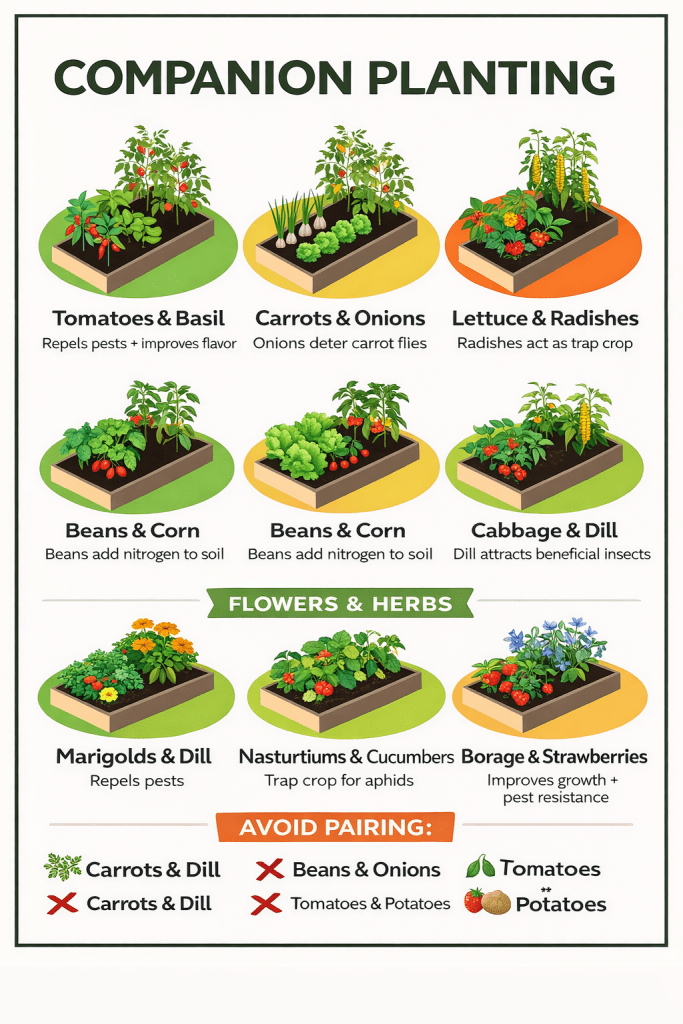
- Tomatoes & basil – Basil repels pests like aphids and enhances tomato flavor.
- Carrots & onions – Onions deter carrot flies, while carrots help loosen soil.
- Lettuce & radishes – Radishes act as a trap crop for flea beetles.
- Beans & corn – Beans fix nitrogen in the soil, benefiting corn.
- Cabbage & cill – Dill attracts beneficial insects that eat cabbage worms.
Flowers & Herbs for Companion Planting
- Marigolds & tomatoes or peppers – Deters nematodes, aphids, and other pests.
- Nasturtiums & Cucumbers, Zucchini – Acts as a trap crop for aphids.
- Borage & strawberries – Improves strawberry health and repels pests.
- Calendula or mint & broccoli, cauliflower and cabbage – Attracts pollinators and repels cabbage moths.
- Lavender & carrots – Lavender’s scent deters pests while attracting pollinators.
Plants to Avoid Pairing Together
- Carrots & dill – Dill can stunt carrot growth.
- Beans & onions or garlic – Onions inhibit bean growth.
- Tomatoes & potatoes – Both are prone to blight, increasing disease risk.
- Mint & parsley, strawberries or chamomile – All will compete too aggressively for nutrients in the soil.
Tips for Successful Companion Planting
- Timing Matters – Plant cool-season crops like lettuce, radishes, peas, kale, spinach, which can tolerate frost, in late April to early May, while waiting to plant warm-season crops like tomatoes, beans, peppers, squash, cucumbers outdoors until late May or early June.
- Spacing Considerations – Make sure to look at the specifications on your seed packages to give plants enough room to thrive while using companion plants for natural support.
- Using Perennials & Herbs for Pest Control – Incorporate lavender, thyme, and chives around vegetable gardens. Mint is another good pest repellent but it can easily take over a space so it’s best to sow it in a planter.
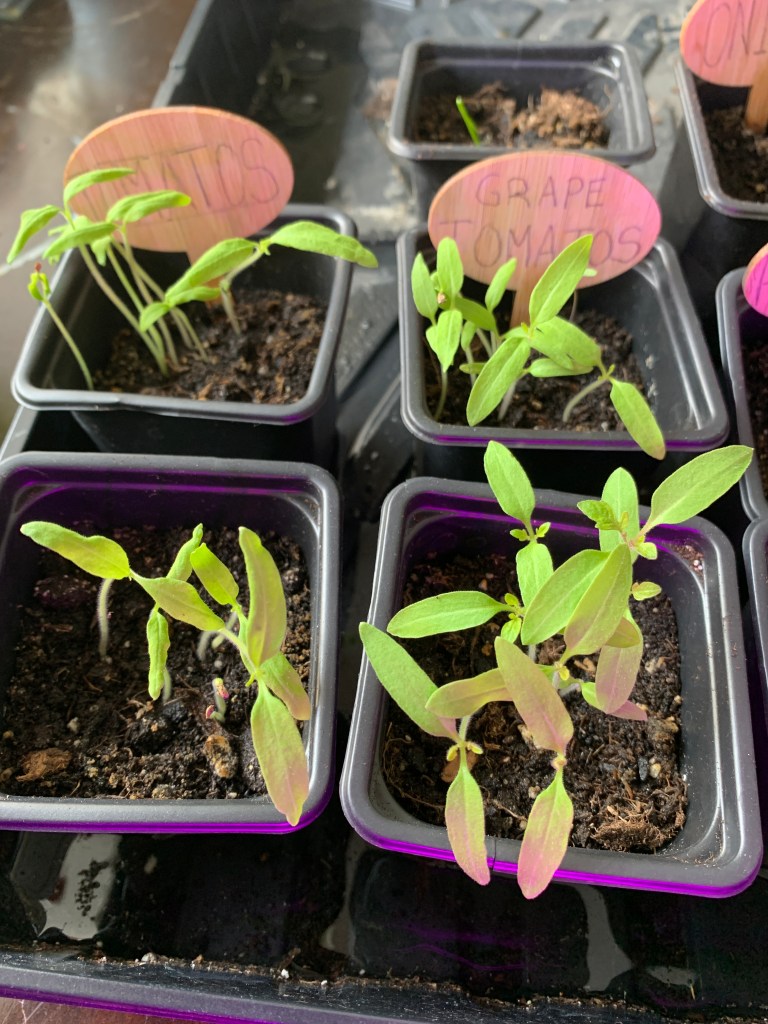
Companion planting is more than just a gardening technique—it’s a way to create a healthier, more resilient, and more productive garden while working with nature rather than against it. By strategically pairing plants that support each other, you can reduce pests, improve soil health, maximize limited space, and extend their growing season despite the challenges of a short summer.
Photos in this article were taken by Heather Morren. Infographic AI generated using information from this article. Information was sourced from a wide variety of online resources. Please ask, should you wish to see a full list.
 Heather’s Gardening Service
Leave a comment