Written by Heather Morren
Gardening in Edmonton is no easy feat. With our shorter growing season, unpredictable spring frosts, and dry summers, local flora are already working hard to thrive. Add in a few persistent pests or sneaky diseases when the humidity spikes, and things can go sideways fast. But don’t worry—a little knowledge and quick action can go a long way toward keeping your garden healthy and happy.
Common Garden Pests
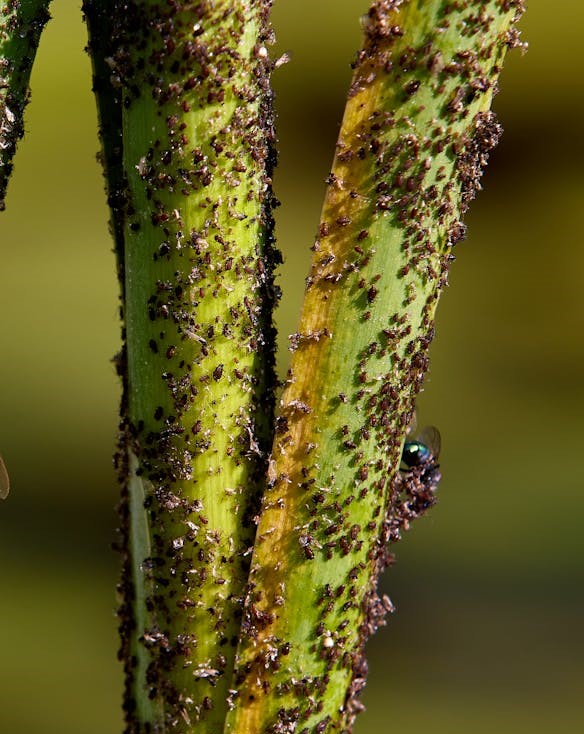
Aphids
- Identification: These tiny green, black, or white bugs cluster on the undersides of leaves and soft stems, sucking the sap and weakening the plant. You might notice curled leaves or sticky “honeydew” residue.
- Favorite targets: roses, lettuce, nasturtiums
- Control tips: spray with water or insecticidal soap or introduce ladybugs.
Cabbage Worms & Flea Beetles
- Identification: Flea beetles leave a shotgun pattern of tiny holes, while cabbage worms chew through leaves.
- Favorite targets: kale, cabbage, broccoli
- Control tips: Use floating row covers early in the season, sprinkle diatomaceous earth around affected plants, or spray with neem oil.
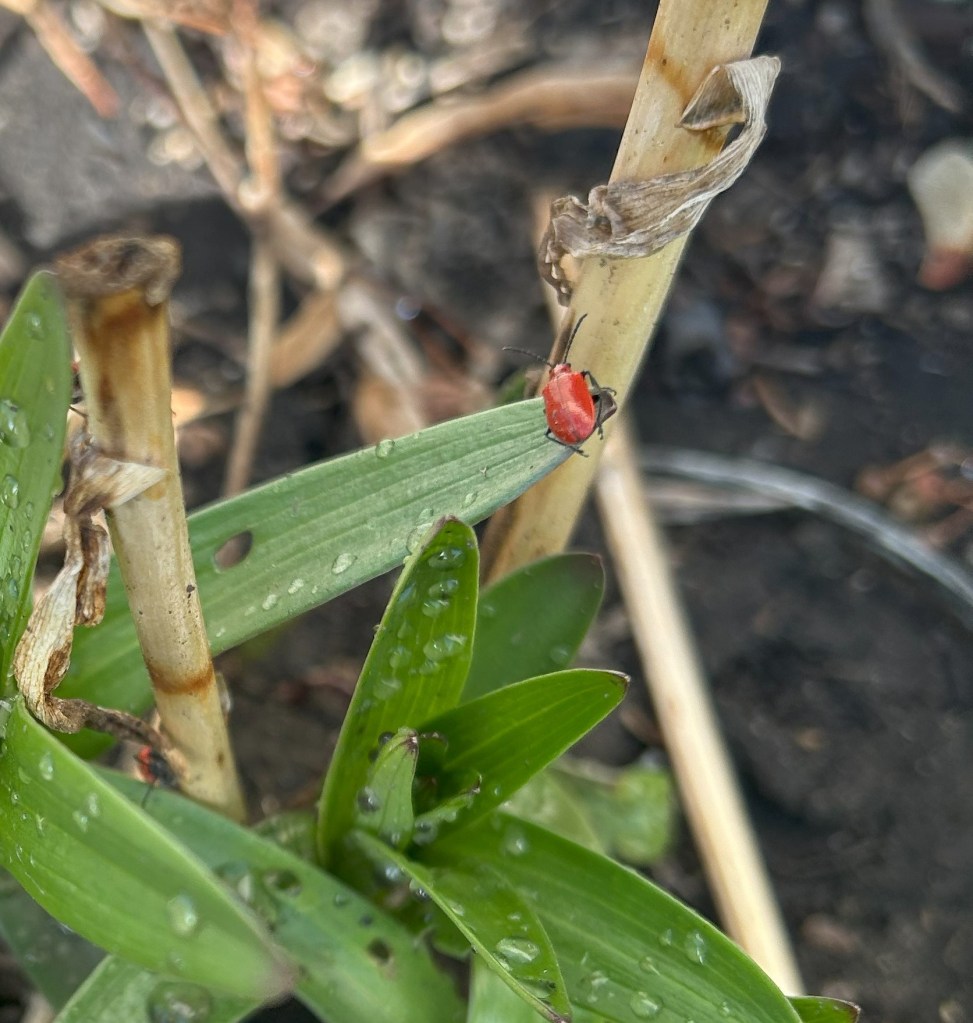
Scarlet Lily Beetles
- Identification: Bright red beetles with black legs and antennae, scarlet lily beetles. Both adults and their slug-like larvae chew holes in leaves, flowers, and stems, often leaving plants ragged and defoliated.
- Favorite targets: True lilies (such as Asiatic and Oriental lilies) and fritillaries.
- Control tips: Handpick beetles and larvae early in the season (like right now!) or use neem oil sprays.
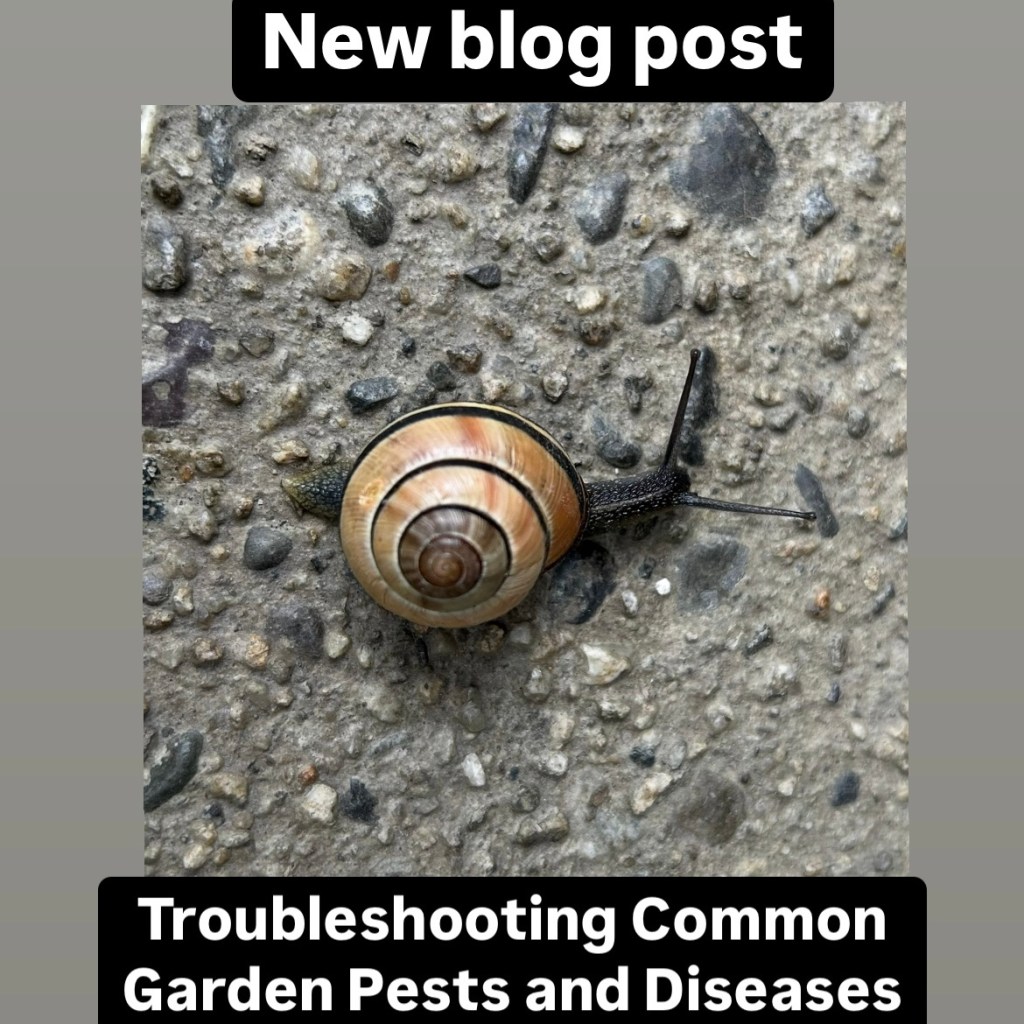
Slugs and Snails
- Identification: These are common after rain or in damp, mulched areas. Look for irregular holes in leaves and slimy trails.
- Favorite targets: hostas, leafy greens, marigolds
- Control tips: Set out shallow dishes of beer to trap them, sprinkle crushed eggshells, or hand-pick them in the evening

Spider Mites and Leaf Miners
- Identification: Spider mites cause speckled, dry-looking leaves, especially during hot, dry spells. Leaf miners create squiggly tunnels inside leaves.
- Favorite targets: vegetables, fruits and herbs
- Control tips: Improve airflow, prune affected areas, and use neem oil or insecticidal soap.
Common Plant Diseases
Powdery Mildew
- Identification: Powdery mildew looks like a white powder on the leaves of a plant, It thrives on warm, dry days and cool nights.
- Favorite targets: squash, zucchini, peonies
- Control tips: Water early in the day, space plants for good airflow, and remove infected leaves.

Blight
- Identification: This fungal disease causes yellowing leaves, black spots, and eventual plant collapse. Wet weather makes it worse.
- Favorite targets: tomatoes, strawberries
- Control tips: Remove affected leaves ASAP, avoid overhead watering, and rotate crops every year.
Root Rot
- Identification: Root rot is caused by overwatering or poor drainage. Roots become brown and mushy, and plants wilt despite wet soil.
- Favorite targets: geraniums, petunias, begonias, herbs
- Control tips: Ensure proper drainage, avoid heavy clay soils, and don’t water unless the top inch of soil is dry.
General Tips for Prevention and Management
- Start with healthy soil consisting of compost, mulch, and organic matter.
- Encourage beneficial insects like ladybugs, lacewings, hoverflies, and parasitic wasps by planting dill, yarrow, calendula, alyssum, cone flowers, marigolds, lavender, and thyme.
- Inspect plants weekly – especially under leaves and stems.
- Practice crop rotation and companion planting (see last month’s article: Creating a Thriving Herb Garden for a little more information about companion planting)
- Avoid overhead watering to prevent fungal issues by bottom watering containers, if possible.
When to Call for Help
If pests or diseases keep coming back, or a plant seems beyond saving, it might be time to pull it and start fresh. For recurring issues, or if you’re not sure what you’re dealing with, don’t hesitate to call a local gardening service.
Photos in this article were taken by Heather Morren. Information was sourced from a wide variety of online resources. Please ask, should you wish to see a full list.
 Heather’s Gardening Service
Leave a comment