
Top 6 Noxious Weeds of Alberta
Written by Heather Morren
When you hear the word “weeds”, most people think of the bright yellow flowered dandelions overtaking their lawn. While dandelions can be a very frustrating weed to deal with, there are actually many, many others that are considered more problematic (in fact, dandelions don’t even show up on the list).
A noxious weed is any plant that has the ability to spread rapidly and, if left to grow in the wrong spot, can cause severe crop losses and lead to major issues like local, provincial or national economic hardship. Weeds in this category must be contained in order to prevent further concerns to the area and may even be assessed (and potentially fined) by local authorities if they are not being controlled.
As a gardener, I believe that it is our duty to help ensure that other plants (and animals) are not disturbed by the abundance of noxious weeds inevitably present in our flower beds and gardens. To help you with this mission, here are the top 6 noxious weeds that the avid gardener should be on the lookout for:
1) Creeping Bellflower
Creeping Bellflower is found in almost all gardens. They will grow in flower beds, sidewalk cracks, and especially love river banks and ponds. In its early stages, this plant has pointy heart shaped leaves which come off their stem very easily, leaving behind their root system to reproduce more. As they mature, the Creeping Bellflower grows to be about 2 feet tall and produces beautiful purple, bell shaped flowers. To eradicate Creeping Bellflower, it is best to dig out this weed just prior to flowering, as it is easier to get the entire root.
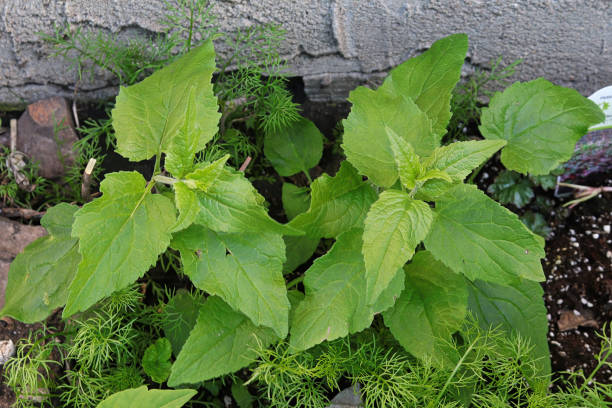
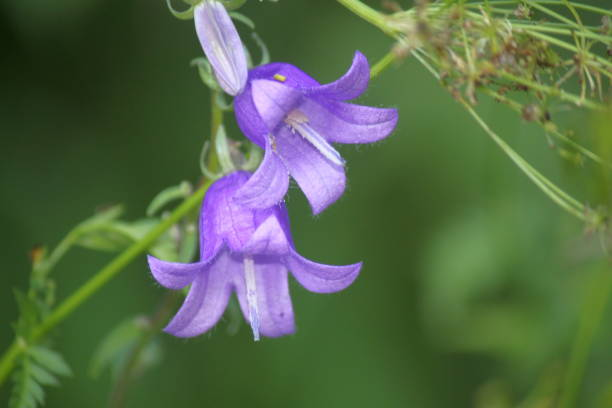
Creeping Bellflower
2) Common Tansy
The Common Tansy was first introduced to Alberta’s soil from Europe in the 1600s. It was commonly used as insect repellent. However, this plant is extremely toxic to both humans and animals so it can be very hard to keep in check. The Common Tansy is easy to spot, as it has bright, button shaped clusters of yellow flowers. The most effective control method is manual removal, as this damages the roots ability to store nutrients. One can also encourage competition from native species.
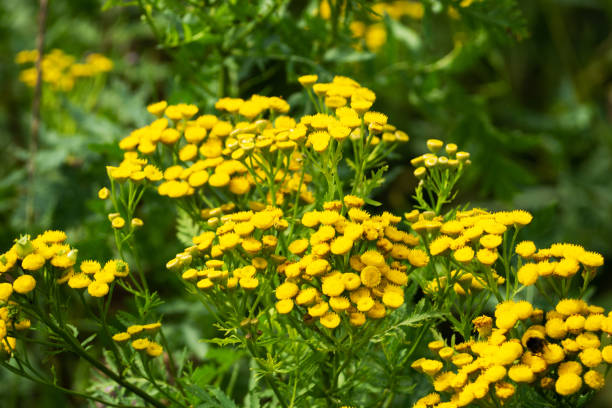
Common Tansy
3) Oxeye Daisy
Another “gift” from Europe, oxeye daisies have become a thorn in the side of farmers across North America. These simple white flowers can quickly take over pastures due to the fact that each flower can produce over 500 seeds per year. Oxeye daisies can also crossbreed with scentless Chamomile and Shasta daisies, also not native to Alberta, leading to even more invasive hybrids. Like most other noxious weeds, manual removal of stems and roots is the best defense against Oxeye daisy.

Oxeye Daisy
4) Leafy Spurge
Leafy spurge is a shrub like perennial that was first introduced to eastern Canada in the 1800s. It quickly and aggressively made its way to Manitoba, Saskatchewan and Alberta. It can now be found in all Canadian provinces (but not territories). Leafy Spurge grows to be about 1 meter tall and boasts lovely yellowish green heart shaped flowers. This persistent perennial packs a double punch when it comes to invading. It has both an extensive, creeping root system and also drops seeds in the fall. Another important thing to be aware of with Leafy Spurge, is the milky colored latex that seeps from its stems and leaves when cut or broken. This substance can poison livestock or pets that may feed on it and can cause skin irritation in humans. Be careful when removing this weed.

Leafy Spurge
5) Yellow Clematis
Clematis is a common perennial, originating from the mountains of India and China. It is often seen growing up trellises and chain link fences all across BC, Alberta and Manitoba. It comes in many colors, most commonly in pink, white, blue and purple, but it is the yellow variety that one must be wary of, as it is not native to Alberta. Clematis grow voraciously and seed prolifically. In the fall, their delicate leaves and beautiful flowers will transform into masses of puffy seed balls which easily float on the wind and drop into neighboring green spaces. The best solution to getting rid of this voracious grower is to remove the plant prior to seeding.
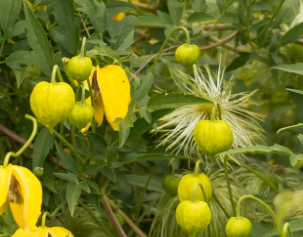
Yellow Clematis
6) Yellow Toadflax
Don’t let the beautiful Snapdragon-like flowers of the Yellow toadflax fool you this gardening season. Although the general shape of their flowers is fairly similar, there are some easy ways to tell them apart. Toadflax have an orange splotch on their “throat”. They grow taller, to about 1 meter in height (compared to 1-3 feet), and have much slimmer leaves than a snapdragon. You may be wondering why such an attractive plant is not welcome in Alberta. Unfortunately, the answer is similar to those of other invasive species. It easily out competes native plants, as well as negatively affecting many crops and grassy pastures. This pretty plant has an extensive, creeping root system, like many of the other invasive species featured in this article and can, therefore, be difficult to eradicate. It is recommended to dig out as much of the roots as possible to prevent further infestations.
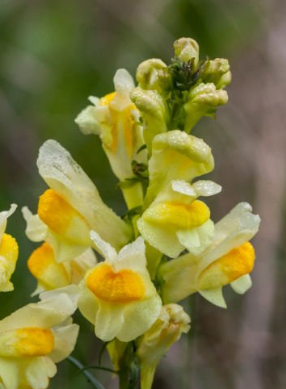
Yellow Toadflax
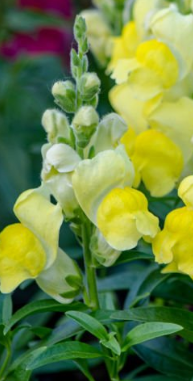
Yellow Snapdragons
For a full list of provincially regulated weeds in Alberta go to:
https://www.alberta.ca/provincially-regulated-weeds
Photos in this article were taken by Heather Morren. Information was sourced from my personal experience and a wide variety of online resources. Please ask, should you wish to see a full list.
 Heather’s Gardening Service
Leave a comment