
Written by Heather Morren
Spring is a splendid time for gardeners. The thrill we experience seeing the green tips of daffodils, tulips, crocus, and hollyhocks leaves poking through the soil, their brightly colored flowers reaching for the sun’s warm rays. But spring can also test a gardener’s patience. Waiting for the perennials to make their debut and waiting for the weather to be warm enough to start planting can feel like waiting for the next eclipse (don’t worry, it won’t take THAT long!).
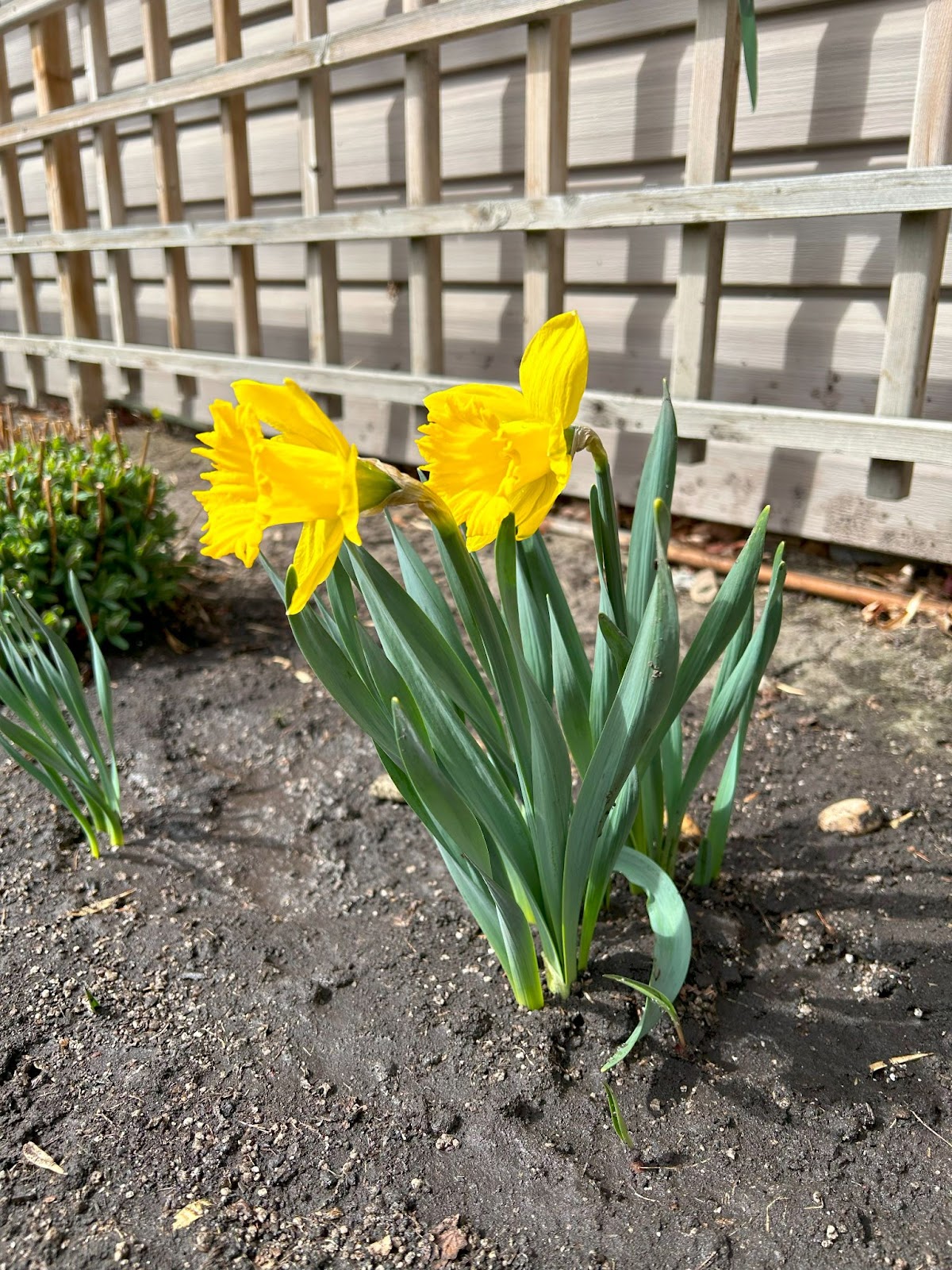
Daffodils blooming in April
While you are standing in your yard, hands on hips, and impatiently tapping your foot, you may begin to notice that some of your perennial shrubs are looking a little worse for wear. As it so happens, spring is the perfect time to give this unruly foliage a good haircut.
Why should I prune my plants in the spring?
Pruning your plants in the spring has many benefits:
- – It encourages more growth
- – It gives you an opportunity to cut out dead or diseased growth that may hinder the growth of new limbs
- – It allows you to keep your yard looking neat and tidy
- – It makes space for the sun to reach branches in the shrub’s undergrowth

This Chinese elm looks stunning after a hard spring trim. It went on to need an additional trim at the end of the season.
What shrubs should I prune in the spring?
Here are some suggestions to help guide your pruning journey this season:
To keep your dogwood, boxwood, spirea, and juniper looking full, a late spring trim will do wonders. You can cut off any tips that have died over the winter and provide your shrubs with a nice shape for the coming season. Lavender, wood spurge, butterfly bush (buddleia), and ornamental grasses also appreciate a heavy cut back in the spring to give new growth a chance.
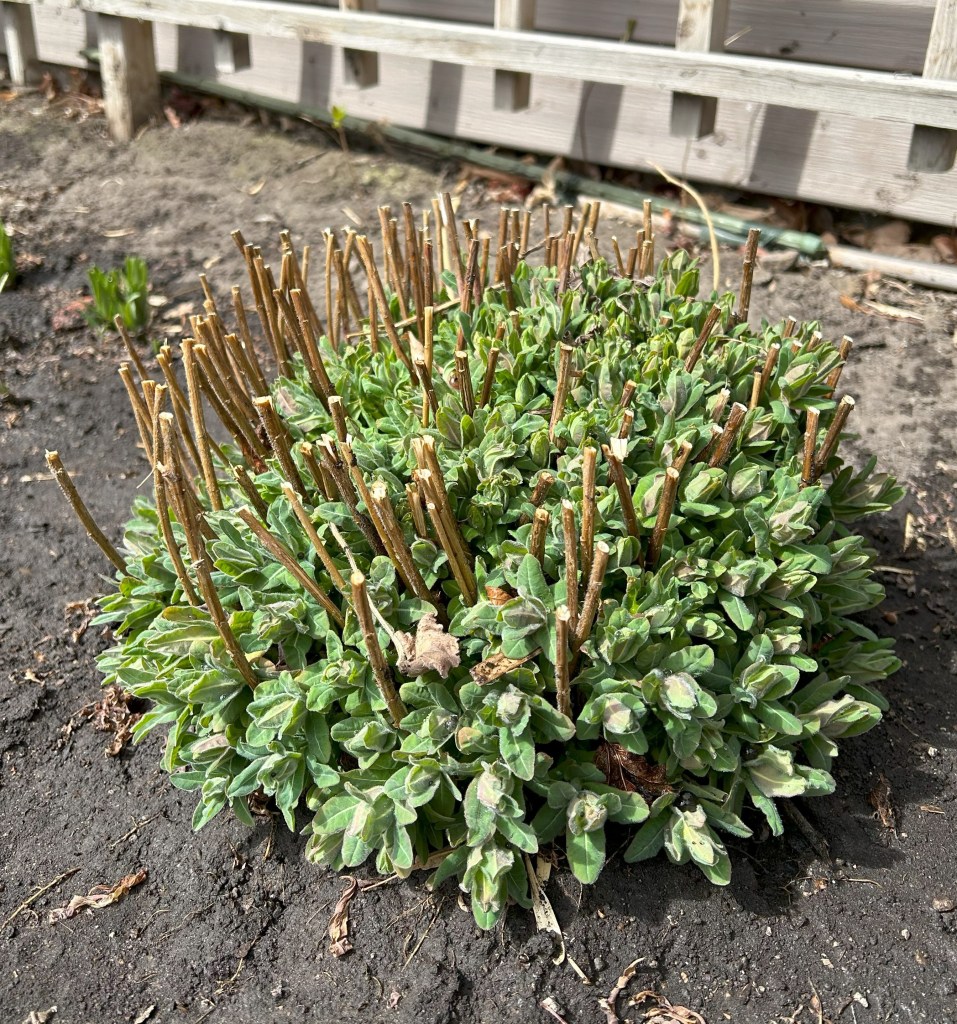
Wood spurge in early spring, after a heavy trim.
Are there any shrubs I shouldn’t prune in the spring?
Not every plant appreciates a spring cleaning. In fact, some perennial shrubs take great offense to being pruned in the springtime. For example, azaleas, rhododendrons, lilacs, hydrangeas and many other flowering shrubs are best pruned AFTER they have bloomed for the season. Some, like lilacs, will even bloom a second time if the weather is suited for it.
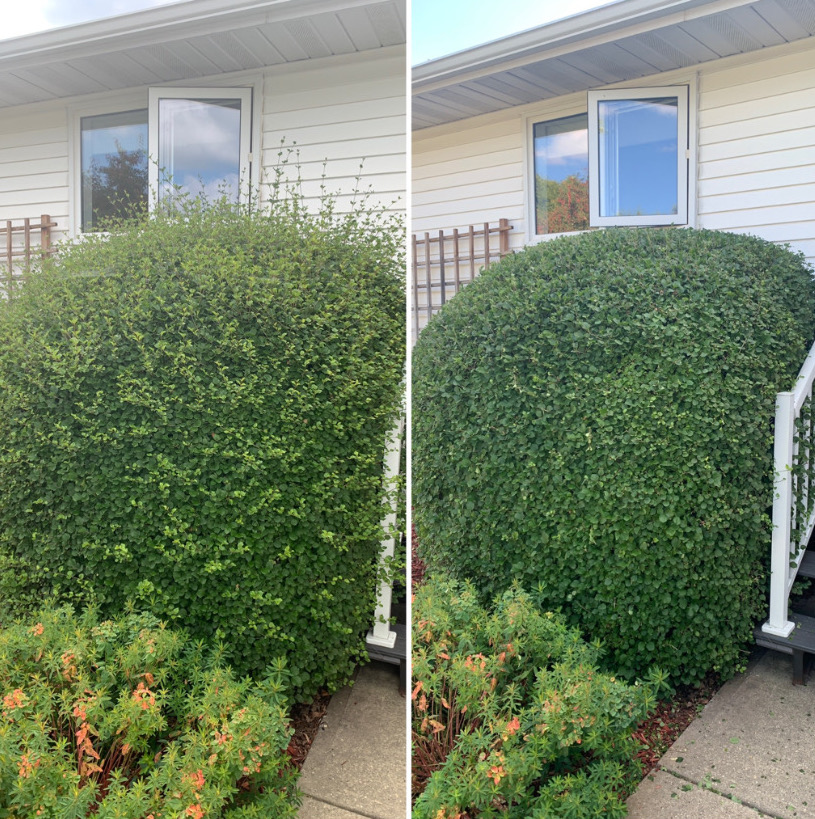
A dwarf lilac bush pre and post midsummer pruning. This bush went on to flower again in early fall.
What tools do I need to prune my plants?
There are many tools you can use to help with your pruning mission. Here are a few of the basics:
A set of secateurs or hand pruners is a very handy (get it – wink wink) pruning tool to have in your arsenal. They are cheap (between $7-$15), can be held in one hand, and can cut through stems 10-15mm thick. I use secateurs for most small scale chopping jobs around the garden.
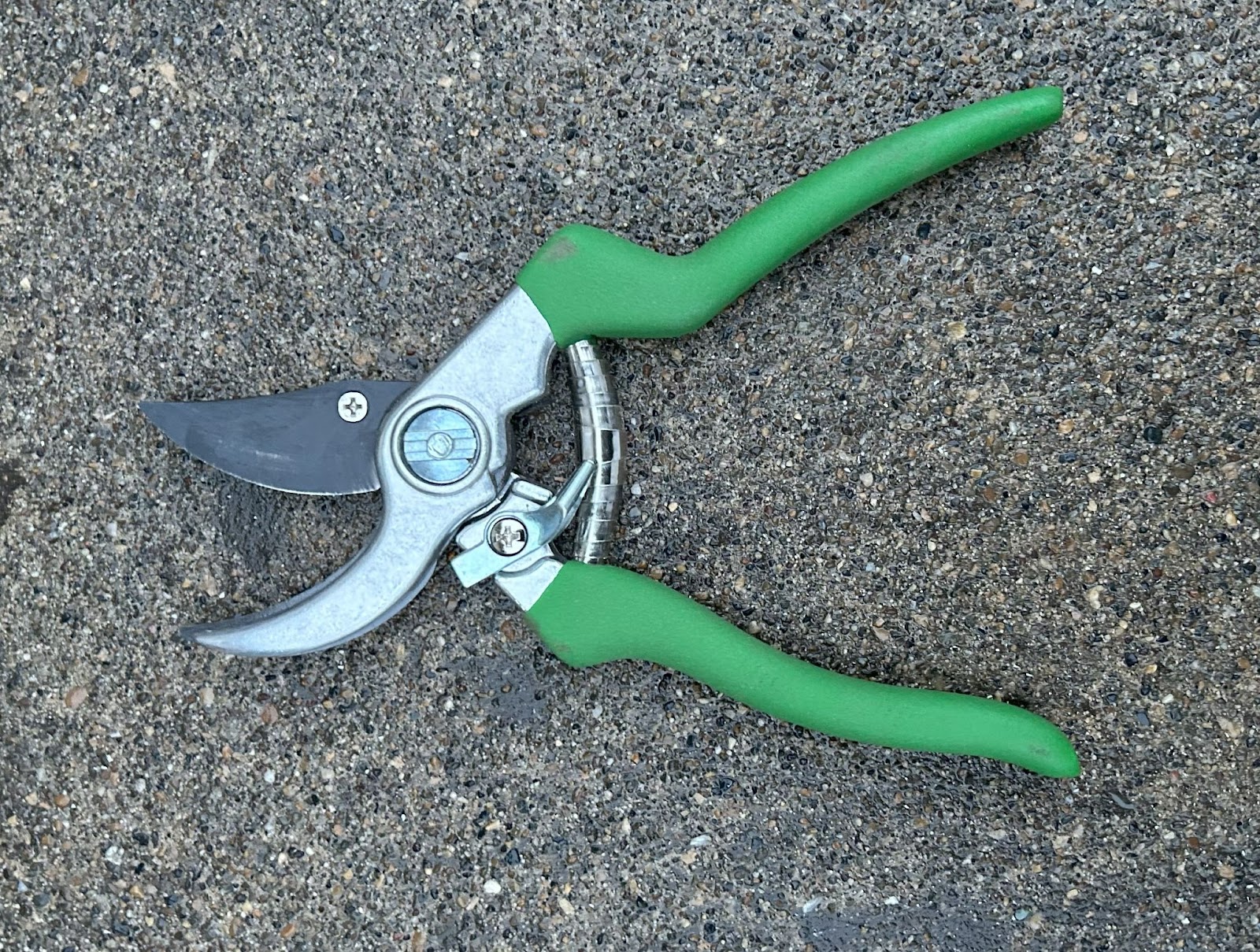
A pair of bypass secateurs/hand pruners
Loppers are another great tool. They are handy for chopping branches as large as 2-3 inches and cost between $25-$40. Loppers also come in varying lengths to make the job easier. The pair I own are even extendable for better leverage. I like to use my loppers when cutting back larger shrubs like lilacs bushes or dogwoods.
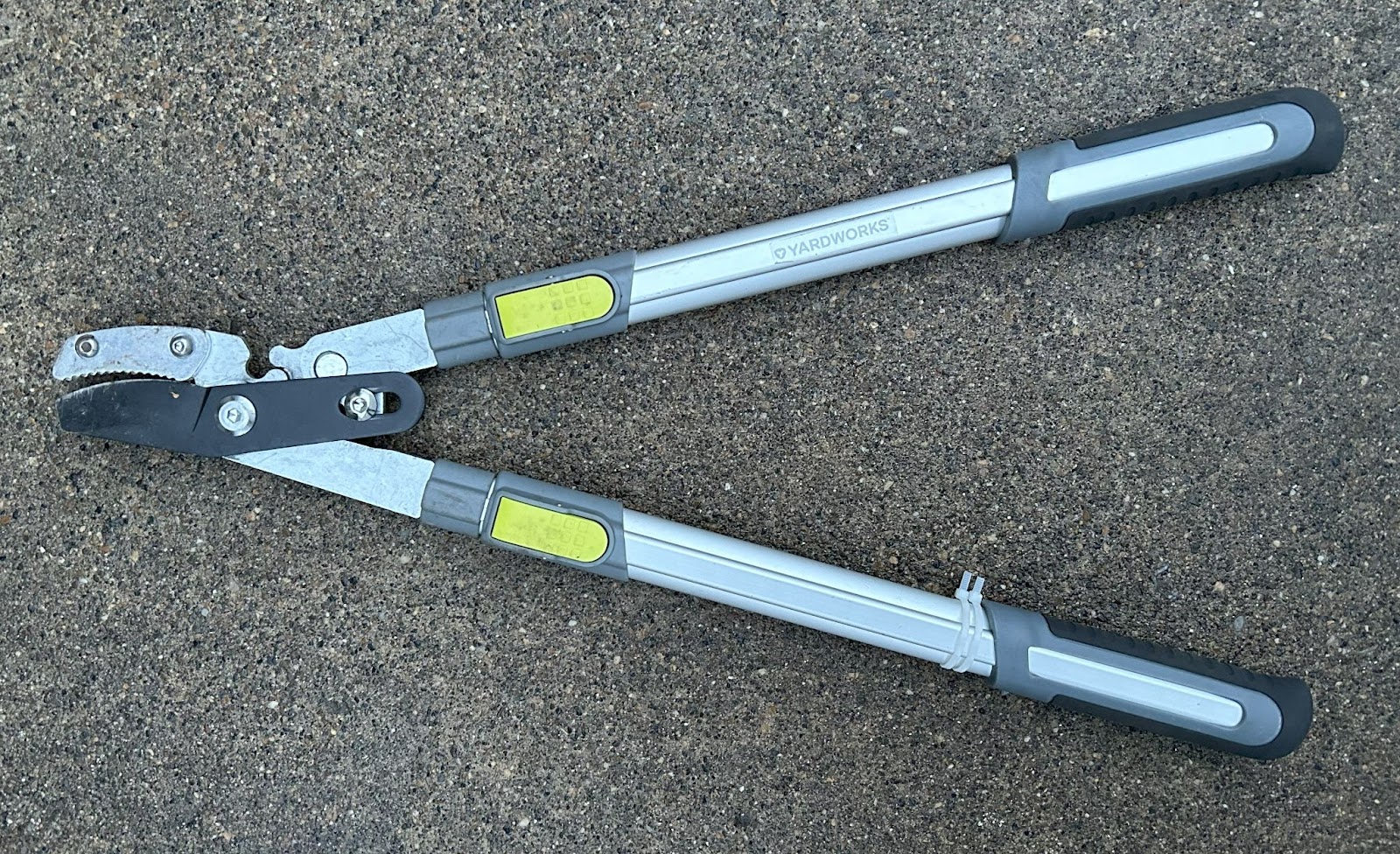
A set of anvil loppers
Hand pruners and loppers come in various styles. The most common types are bypass, anvil and ratchet. Bypass means that there are two blades that both cut, like the ones in the photo of the secateurs above. Anvil means that there is one blade that cuts onto a flat surface, like the loppers in the photo above. Ratchet can be bypass or anvil but have a ratchet mechanism to make the cutting easier (not pictured).
The pruning tool I enjoy using the most is a hand held hedge trimmer. They come in many sizes and power modes including battery, electric and gas. They can range in price from $60 to close to $500 depending on what kind of job you want done. The hedge trimmer that I own is battery powered, lightweight, costs about $150 and gets the job done quite well.
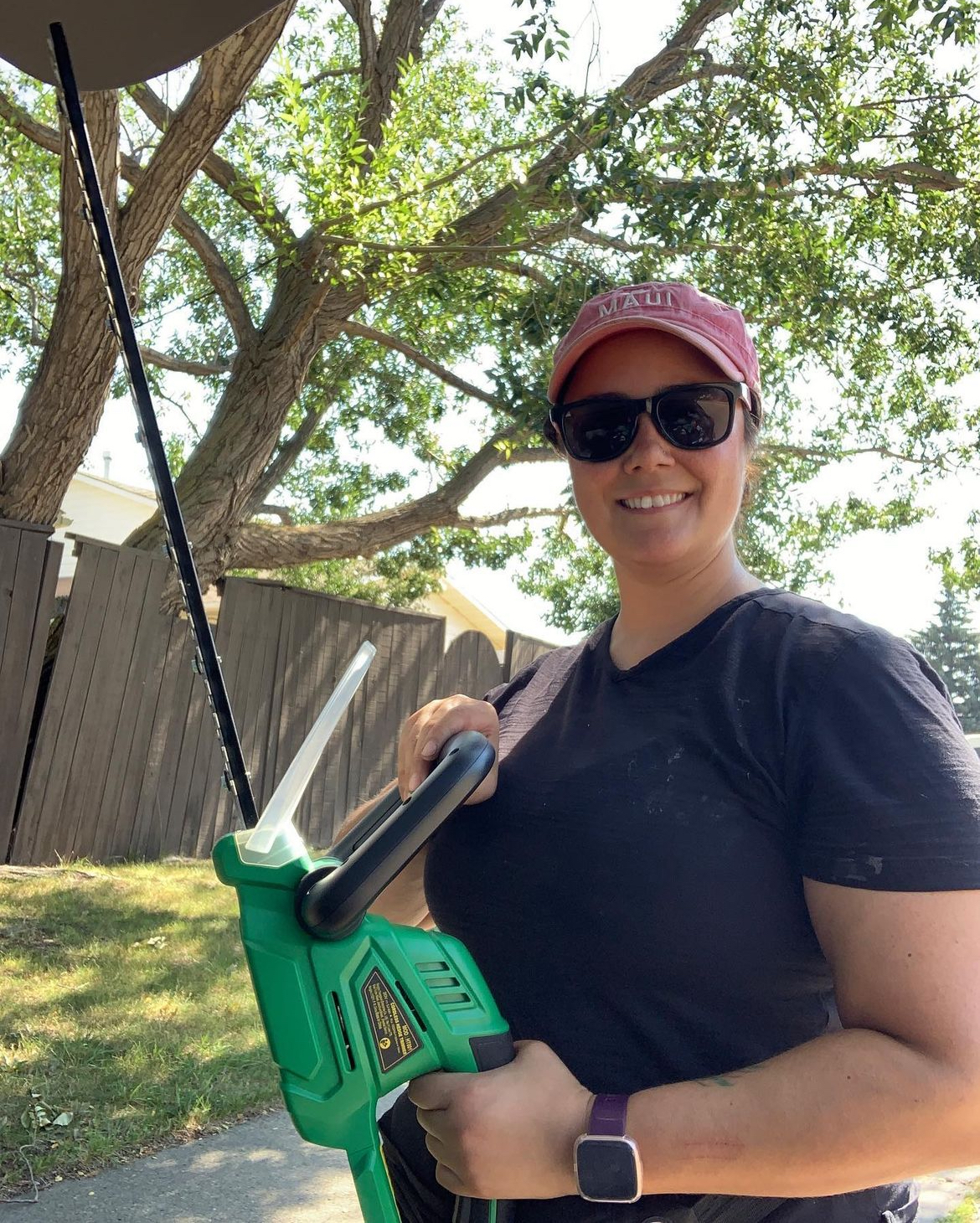
If you have a larger project to tackle, like removing dead or diseased branches from your apple tree, for example, then a pruning saw comes in handy. A pole pruner is also a great tool for reaching branches that are too far out of reach.
Note: Heather’s Gardening Service does not work with large trees. We are neither equipped nor trained for it.
How to prune my perennial shrubs?
Pruning your perennial shrubs is easy and can be quite enjoyable. It is a great opportunity to get a little creative. Shrubs can be trimmed into many different shapes and not just the standard round or square shapes.
First things first, always make sure that any tools you are using to prune are disinfected. You can use rubbing alcohol or diluted bleach to do this. It will help prevent the spread of infection between plants.
It is also important to wear protective gear, such as gloves, safety glasses and close toed shoes when pruning. If pruning above your head, be sure to have protective headgear as well.
When cutting your plants, cut away diseased, dead or dying stems first. Then proceed with cutting back branches for aesthetic purposes, like evening out the shape. For large branches, be sure to cut at a 45 degree angle so that water doesn’t sit on the ends of the branches and cause rot. It is also recommended not to cut more than 25% of the shrub in one growing season unless the plant specifically likes a hard, rejuvenating prune, such as lavender.
Now that you are armed with some information about spring pruning, it’s time to get out there and start practicing! Be safe but have fun!
Photos in this article were taken by Heather Morren. Information was sourced from my personal experience and a wide variety of online resources. Please ask, should you wish to see a full list.
 Heather’s Gardening Service
Leave a comment