Written by Heather Morren
While gardening can be a very relaxing and soul satisfying hobby, it can also be quite time consuming. Pulling weeds, watering, cutting back overgrown plants, trimming shrubs and hedges, and cutting the grass are just a few of the tasks that keep one busy in the garden.
Make a Plan
You may be wondering why I would choose to write an article about outdoor gardening when everything seems to be covered in a few feet of fluffy white snow. I personally find chilly days like this to be the perfect time to be thinking about being outside in the sunshine. But also, if you truly wish to have a low maintenance garden this season, then the first and most important step is to make a plan and what better time to make one than when you’re bundled up inside with a hot cup of cocoa and dreaming of warmer weather.
Here are some suggestions to help you make a plan to keep up with and enjoy your garden this coming growing season:
Preparing Your Growing Space
There are many useful ways that you can prepare your growing space in order to help keep the workload in check.
First of all, consider where you will be planting. Large, open beds with plants arranged neatly in rows will require more maintenance. Weeds will be easy to spot and will nag at your mind saying “pick me, pick me” and not in that enduring way a child chants it when they want to be on your team. Of course, having too many plants clustered together can present its own problem, making it difficult to get to those pesky weeds. However, clustering your plants together can also give weeds less of an opportunity to grow, crowding them out and taking their sunshine and water.

Planting in rows makes those pesky weeds very obvious and gives them plenty of space to grow.
Containers and hanging pots are another great way to reduce some of the physical load of gardening. Containers are less likely to have weeds and, if they do, they can be quickly eradicated with a few brief pulling sessions. Buying premade pots can be very expensive but, if this is an aesthetic you like and if you have an artistic knack, you can save some money by buying pots that you can reuse and a few bags of soil and purchasing plants you enjoy in bulk containers. That way you can separate out your plants into multiple pots and mix and match as you see fit.
Raised and contained garden beds are another great way to keep maintenance low. Contained gardens have the benefit of keeping what’s planted in them within their walls (well, usually). Some more invasive plants, like goutweed, will go under your barriers and grow into other beds and even grass, but most plants are fairly respectful of the barriers you put up. Raised beds are distinctly beneficial because they also make it so that you don’t have to bend over as far or kneel in order to care for your plants.
Another way to discourage weed growth is by adding mulch to cover your soil to keep pesky weeds out and moisture locked in. Mulch can consist of: pine needles, dead leaves, rocks, wood chips, straw, shredded rubber or grass clippings. You can also add a layer of newspaper, cardboard or landscaping fabric underneath your mulch for an extra layer of protection.

Containers, mulch (like rocks and wood chips), and borders are a great way to keep weeds at bay.
Choosing Your Plants
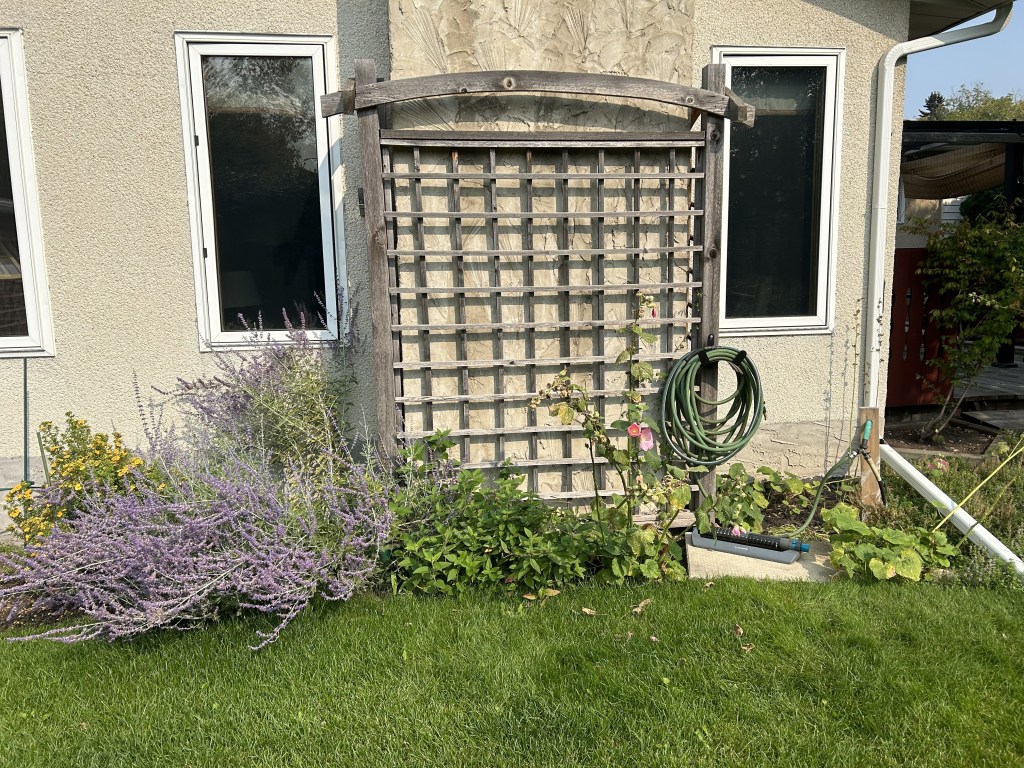
Perennials are an obvious choice when deciding the kinds of plants that should go in your low maintenance garden. They are generally more hearty and easier to care for than annuals. They are more likely to be able to withstand extreme drought if you forget or don’t have time to water them and are more likely to be able to withstand the extreme colds of winter so that next year’s planning is not as time consuming. Some easy to care for perennial flowers that you might consider and that do well in zone 3/4 could include: hostas, columbines, peonies, hydrangeas, and cosmos. If flowers aren’t your thing, you might consider low lying plants such as: silver ragwort, wooly thyme, creeping jenny, stonecrop and lamb’s ear. You might also consider a wide variety of decorative grasses like black mondo and ribbon grass or some shrubs like spirea, boxwood, dogwood, ninebark and dwarf lavender.
That being said, there are some perennials you will want to be wary of planting, as they are so hearty that they will likely take over your entire garden. That can go one of two ways: you either have an entire garden full of one plant so maintenance is almost nonexistent, or — it pushes out all other plants and starts to grow into your lawn, making bigger problems for you in the future. Some of these beautiful but intrusive plants include: lily of the valley, yarrow, fiddlehead ferns, the aforementioned goutweed, deadnettles, cone flowers, irises and daylilies.

Hostas (right) are an easy to grow flowering perennial that comes in many varieties. Fiddlehead Ferns (left) are also very hearty but will spread easily and take over entire flowerbeds if given the opportunity.
Other Suggestions
There are also a few other suggestions that I can offer that are a little more extreme but sometimes necessary. Depending on your space, your amount of time or ability to care for your yard, and the way that you use your yard, you may choose to alter your garden space more drastically. Hard scaping is a great way to add interest and usefulness to your yard. You may add a stone walkway or fire pit/seating area. You may choose to add a wooden deck or even replace your grass with the extremely low maintenance artificial grass. All that being said, weeds are often still an issue. They will grow between deck boards, paving stones and even through artificial grass at times but they are easier to treat chemically without risking harming surrounding plants.
So, there you have it, a game plan to start preparing your low maintenance garden so that you can reduce the amount of time you spend picking weeds and increase the amount of time you spend simply enjoying the beauty of nature. Happy planning!
Photos in this article were taken by Heather Morren. Information was sourced from a wide variety of online resources. Please ask, should you wish to see a full list.
 Heather’s Gardening Service
Leave a comment